World Space Week 2026 highlights how falling launch costs and new players are widening access to a space economy heading for a trillion dollars by 2030.
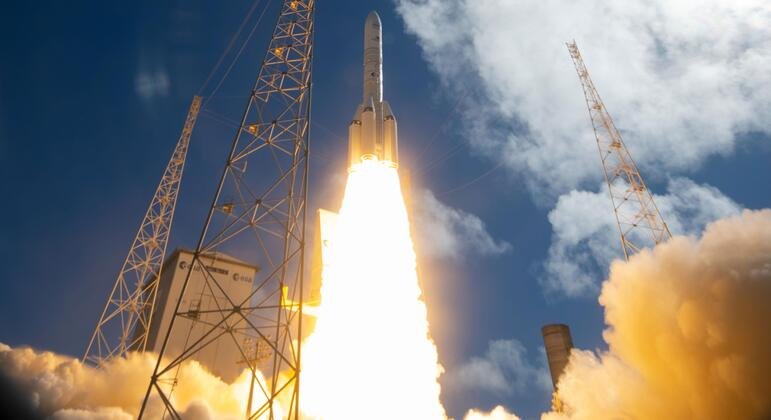
Getting to orbit is no longer the business of a handful of superpowers. Reusable rockets, commercial launch companies, start-ups, university teams and newly active national space agencies have changed who can take part in the space sector.
That shift is the theme of this year's World Space Week, which runs from 4 to 10 October under the title "Rocket revolution". The reporting is from UN News.
What the week is about
World Space Week has been marked every year since 1999. It brings together students, teachers, scientists and space professionals. This year more than 50,000 events are planned in over 100 countries.
The focus is on three things working together: new technology, cheaper launches, and a wider range of actors reaching orbit.
Why it matters beyond the launch pad
Satellites are not an abstract luxury. They carry mobile and internet signals, power navigation apps, feed weather forecasts, support disaster response and monitor the environment. Countries that can access that data can apply it to national priorities.
Aarti Holla-Maini, who heads the UN Office for Outer Space Affairs (UNOOSA), the UN body that helps countries use space technology, said more countries, institutions and communities than ever now have the chance to use space for science, Earth observation, communications and problem-solving on Earth.
The commercial side is growing fast too. The global space economy is on a path to becoming a trillion-dollar industry by 2030, and governments are keen to get a share of it. For countries that have historically been left out, that growth is a route to building local expertise and industries.
Access is more than rockets
UNOOSA makes the point that access is not only about who can launch. It is also about who has the training, the skills, the infrastructure and the chance to help shape the rules.
The agency runs several programmes aimed at that gap, including Access to Space for All, the Global Space Law Project, Space4Women and Space4Youth.
Over the past year, its activities have included hands-on satellite development training through the KiboCUBE Academy, astronaut training at NASA Space Camp for young people selected through a Space4Youth competition, satellite launch and deployment slots through KiboCUBE, the Payload Hosting Initiative and EXOpod, and advisory missions to countries drafting national space laws.
The governance question
More traffic in orbit means more rules are needed. The Committee on the Peaceful Uses of Outer Space (COPUOS), set up in 1959, is the main UN forum for space governance.
It is dealing with space traffic coordination, lunar activities, space debris, nuclear power sources in space and the use of space resources. In 2025 it created an Expert Group on Space Situational Awareness, and an action team is looking at how countries coordinate the growing number of Moon missions.
"Greater access to space also brings greater responsibility," Holla-Maini said, adding that international cooperation becomes more important as more actors reach orbit.