The Institute for Fiscal Studies says weak collection, mining deals and generous tax exemptions are costing Ghana money it badly needs for roads, salaries and debt repayment.
Ghana collected GH¢224.88 billion in total revenue and grants in 2025. Had it performed at the average level of its Sub-Saharan African neighbours, the figure would have been GH¢288.26 billion — a gap of GH¢63.38 billion in a single year.
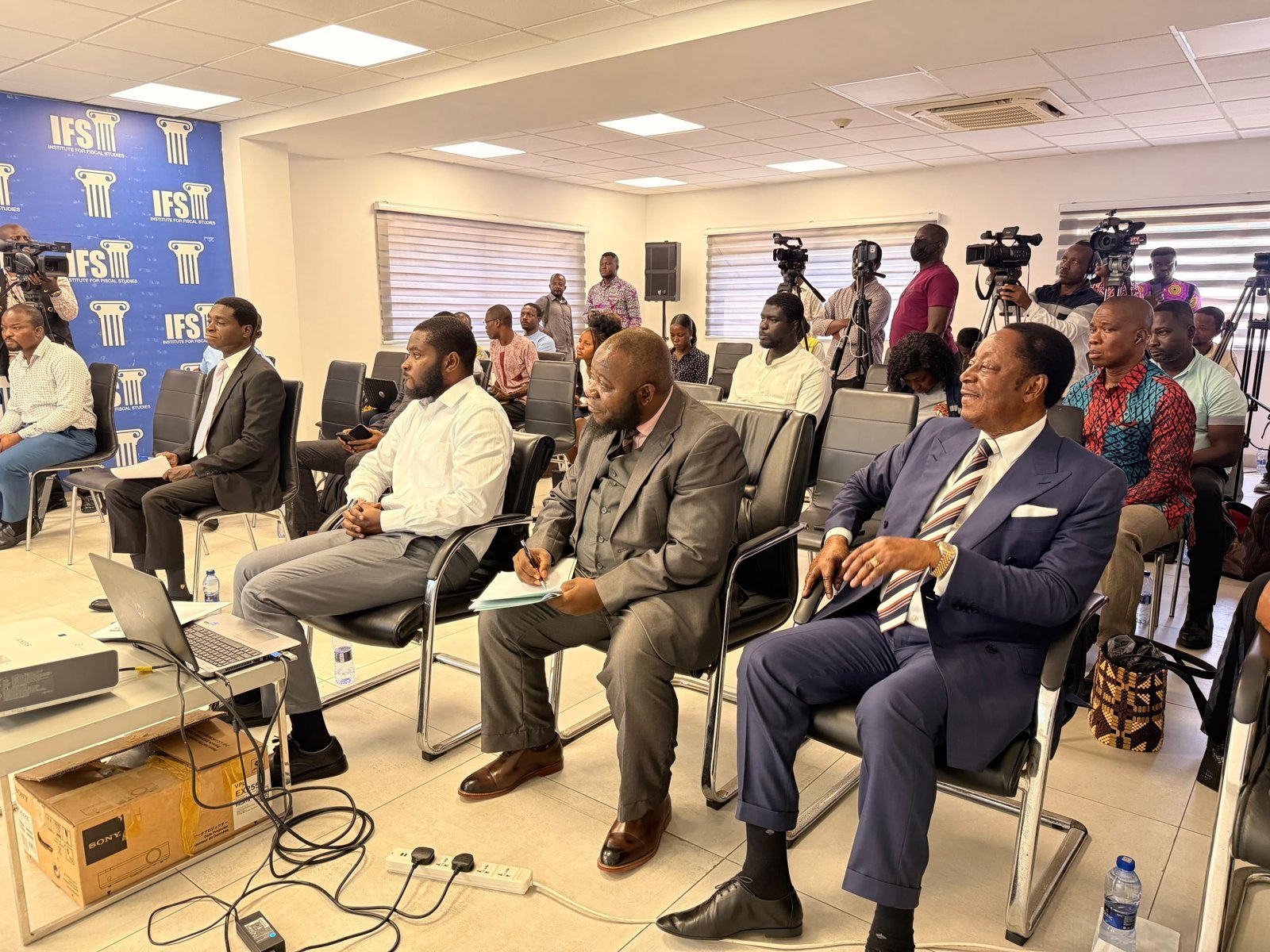
That is the central finding of a policy brief presented in Accra on Thursday, November 5, 2026, by Dr Said Boakye, Executive Director of the Institute for Fiscal Studies (IFS), an Accra-based economic policy research body. The Ghanaian Times reported his presentation of the October 2026 brief, titled A Reexamination of the Low Government Revenue Mobilization in Ghana.
Where Ghana sits
Total revenue and grants came to 15.7 per cent of Gross Domestic Product (GDP) — the total value of goods and services produced in the country. That places Ghana 18th out of 25 Sub-Saharan African countries assessed, below the regional average of 20.1 per cent.
At the top were Namibia (31.3 per cent), Seychelles (30 per cent) and Botswana (29.5 per cent). Matching Botswana would have given Ghana GH¢423.06 billion in 2025 — roughly GH¢198.18 billion more than it actually took in.
Dr Boakye linked the shortfall to visible problems: thin infrastructure, heavier borrowing, rising debt servicing costs and low public sector pay. He pointed to the International Institute for Management Development's 2025 infrastructure ranking, where Ghana scored 13.5 points against Botswana's 28.3 and South Africa's 20.4. Ghana's GDP per person stood at US$2,419 in 2024, compared with US$7,650 in Botswana and US$6,267 in South Africa.
Three causes
Mining. Between 2019 and 2023, government revenue from mining averaged only 15 per cent of the sector's value added. In Botswana over the same period, the figure was 60.9 per cent. In 2025, Ghana's mining sector produced US$13.40 billion in value added, but government took in US$1.60 billion. At Botswana's rate, that would have been about US$6.56 billion more. Dr Boakye credited Botswana's stronger take to the state holding direct stakes in mining ventures, earning dividends alongside royalties and company taxes.
Leakages. Underreporting, evasion, avoidance and collusion involving revenue officials were named as key drains. He referred to a disclosure in April 2026 by Anthony Sarpong, Commissioner-General of the Ghana Revenue Authority (GRA), that more than GH¢11 billion was lost at Ghana's ports through wrong declarations on the origin, classification and value of imported goods.
Exemptions. Successive governments have handed out tax holidays and duty waivers, particularly to foreign investors, under instruments such as the Free Zones Act and the Ghana Automotive Development Policy. The Ghana Investment Promotion Centre (GIPC) lists as many as 31 separate incentive packages.
What IFS wants done
Dr Boakye urged the state to invest directly in mining or partner private firms, and to consider production-sharing agreements in place of the current concession system. He also called for a tougher anti-corruption drive inside revenue agencies, a "carrot-and-stick" system of rewards and swift punishment for officers, and a review that scraps exemptions failing to deliver jobs, foreign exchange or value.
Ultimately, he argued, Ghana should attract investors by improving its economic and political environment rather than by giving away tax.