A new Ghana Statistical Service report shows the economy and job numbers have grown for 35 years, yet most workers lack formal protection and one in three young people cannot find work.
Ghana now has 13.3 million people in work, more than double the six million recorded in 1992. But the Ghana Statistical Service (GSS), the state body that produces the country's official data, says most of those jobs sit outside the formal economy.
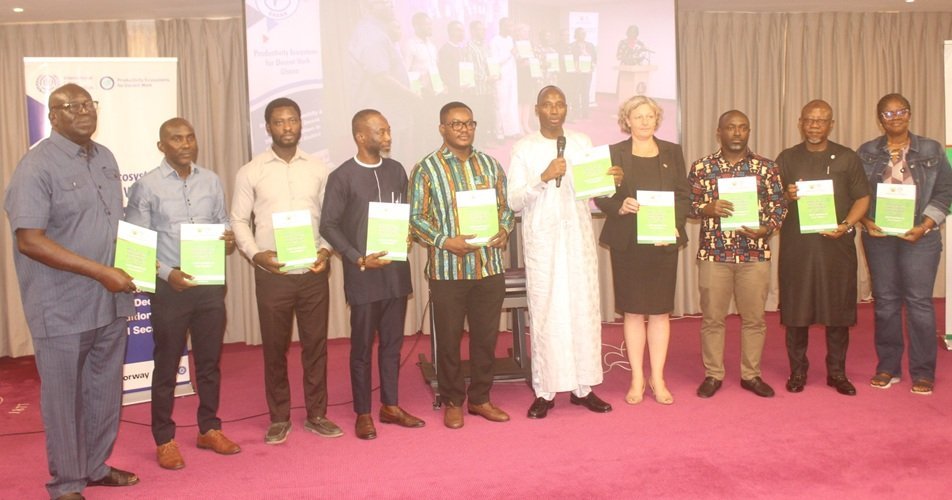
The figures appear in a report titled Productivity, Employment and Growth 1991–2025: Shares in the Gains, which reviews 35 years of economic and labour market performance. The Ghanaian Times reported the findings.
Most workers are informal
In the third quarter of 2025, 85.9 per cent of workers were in the informal sector. That means the vast majority are outside arrangements that typically come with written contracts, pension contributions, paid leave or protection from sudden dismissal.
The breakdown shows 61.8 per cent of workers are self-employed, while only 20.5 per cent are paid employees. For anyone sending money home or thinking about returning to Ghana to work, this is the core shape of the labour market: trading, artisanal work and own-account business, rather than salaried employment.
Growth has been strong, but unevenly shared
The report credits Ghana with real economic progress. Since 2008, the country's growth has generally run above the Sub-Saharan Africa average. Growth peaked at roughly 14 per cent in 2011, the period after commercial oil production began, and has run between four and six per cent a year since 2014.
The exception was 2020, when growth fell to 0.5 per cent during the COVID-19 pandemic.
Poverty fell sharply over the longer period, from 51.7 per cent in 1991 to 23.4 per cent in 2017. But inequality moved the other way. The Gini index, a standard measure where a higher number means a wider gap between rich and poor, rose from 38.1 to 43.0 over the same stretch.
In short, the national pie grew, but the slices did not grow at the same rate for everyone.
Young people and the education puzzle
Unemployment among Ghanaians aged 15 to 24 stands at an estimated 32.4 per cent. That is close to one in every three young people in the labour force without a job.
The education figures are striking. Unemployment is 36.2 per cent among people whose highest level of schooling is secondary, compared with 14.3 per cent among those with tertiary education.
That gap suggests senior high school completion on its own is not opening enough doors in the current job market, while a degree or higher qualification still carries a clear advantage.
What it signals
The report's title points to its own conclusion: the question is not whether Ghana has grown, but who has shared in the gains. With nearly nine in ten workers in informal jobs, the data suggests expanding formal, secure employment remains the main unfinished task.