
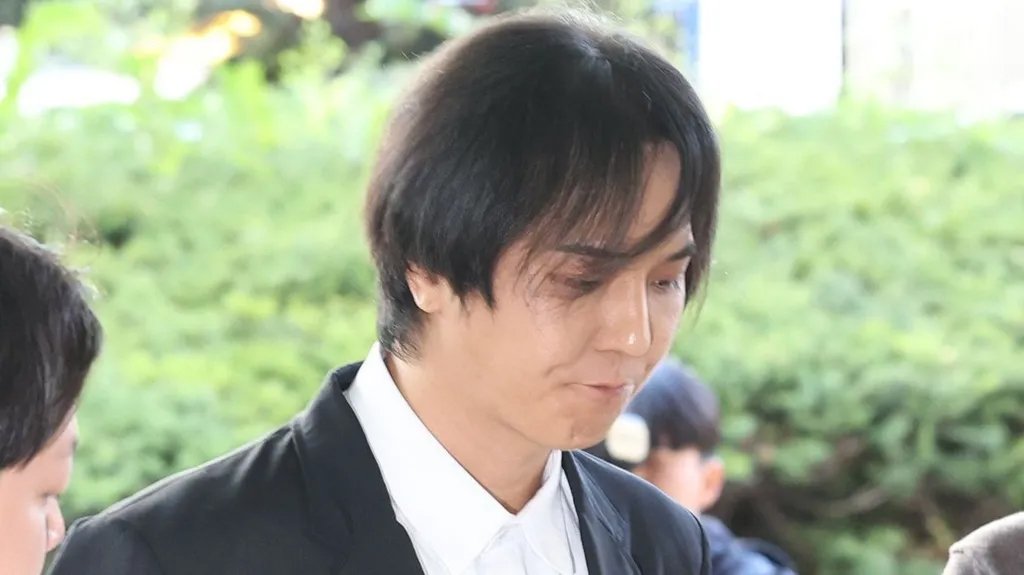
The Winner band member was found to have skipped his alternative national service 102 times, in a case that revives South Korea’s long debate over celebrities and conscription.
A court in South Korea has convicted K-pop singer Song Min-ho of breaking the country's military service law and handed him a one-year prison sentence, suspended for two years.
The ruling, delivered on Thursday, means the 33-year-old will not go to prison unless he commits another offence during the two-year probation period. The Ghana Report carried details of the case.
What he was convicted of
Song, a member of the boy band Winner and known on stage as Mino, served as a social service agent at a community centre in Seoul between 2023 and 2024. The court found he recorded 102 unauthorised absences over a 21-month posting.
The court said military service must be carried out faithfully and that social service agents are not exempt from that standard. It also noted that Song admitted the charges and showed remorse.
His supervisor at the centre was also given a suspended jail term for helping him avoid duties, including falsifying records to show that he had reported for work.
Investigators opened the case shortly after Song was discharged in 2024, following local media reports that he was often absent and had taken excessive sick leave.
How South Korea's service system works
All able-bodied South Korean men are required to serve at least 18 months in the military. Men who cannot serve in uniform for health reasons may instead be assigned as social service personnel, working in public institutions such as community centres. That is the route Song took.
Because the duty is universal, how celebrities handle it is closely watched. A long absence can stall a career in an entertainment industry that moves quickly, but avoiding the duty attracts heavy public criticism and legal consequences.
Earlier cases
The issue is not new. Psy, the singer behind the global hit "Gangnam Style", had to enlist twice, in 2003 and again in 2007, after a Seoul court ruled he had neglected his duties by continuing entertainment work during his first stint.
Singer Steve Yoo, one of the biggest stars of the 1990s and early 2000s, was at the centre of a national scandal in 2002 when he was found to have evaded service. He renounced his South Korean citizenship and took United States nationality shortly before he was due to report, and authorities barred him from entering the country.
What happens next
Speaking to reporters before the ruling, Song said he regretted his actions and was "sorry toward the people who gave me so much love", as reported by the Seoul Economic Daily.
He did not say whether he intends to re-enlist and complete the mandatory duty.
For Ghanaian fans of K-pop at home and in the United States, where the genre has a large following, the case is a reminder of how tightly South Korea ties celebrity status to national obligations that ordinary citizens cannot avoid.