Ajay Banga says 1.2 billion young people will seek work in the next 10 to 15 years but only 400 million jobs are expected — a gap that shapes how the Bank will lend to countries like Ghana.
The World Bank Group has made job creation the organising idea behind its lending and investment plans, pointing to an expected shortfall of about 800 million jobs worldwide over the next decade and a half.
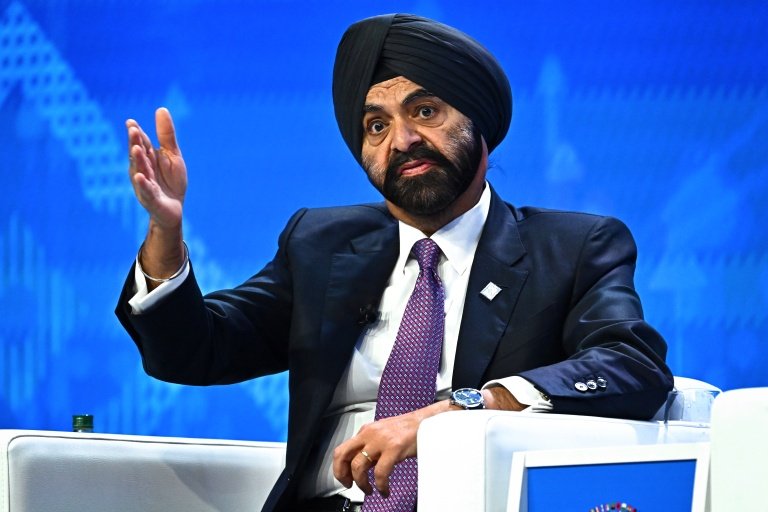
Speaking at the plenary session of the 2026 Annual Meetings in Bangkok, World Bank Group President Ajay Banga said roughly 1.2 billion young people will enter labour markets in the next 10 to 15 years, while only about 400 million jobs are likely to exist for them.
"A job is not a statistic. A job is dignity," Banga said, framing employment as what separates young people who are building a future from those simply waiting for one.
Three pillars
The strategy, as reported by Norvan Reports, rests on three linked parts.
The first is infrastructure, both physical and human. Last year the Bank committed $40 billion — close to a third of its financing — to electricity, water, transport, digital connectivity, health, education and skills.
The second is policy certainty. About 30 percent of the Bank's public-sector financing went into reforms meant to produce clearer rules and stronger institutions, the kind of predictability investors look for before committing money.
The third is financial tools: guarantees, equity and local-currency funding designed to deal with currency risk and limited access to credit. A project can be commercially sound on paper and still fail to attract money if exchange-rate swings or political uncertainty wipe out the expected return — a familiar problem for Ghanaian businesses borrowing in dollars.
The money is moving, but not everywhere
Private capital mobilised alongside World Bank operations rose from about $35 billion in the 2022 financial year to $112 billion last year. Together with the Bank's own commitments, total financing passed $230 billion.
Mobilisation more than doubled across Africa and nearly tripled in lower-middle-income countries. Almost 55 percent of the financing and mobilised private capital went into infrastructure and energy, agribusiness, health, tourism and value-added manufacturing.
The weak spot is clear. In low-income countries, private capital mobilisation stayed at roughly $3 billion. The economies with the greatest need are still the hardest places to attract commercial investors.
The Bank says its answer is to lean more on micro, small and medium-sized enterprises, using digital records to make them visible to lenders, linking them to bigger buyers and easing restrictive rules.
Targets and delivery
Mission 300, run with the African Development Bank, aims to connect 300 million Africans to electricity by 2030. Fifty-nine million have gained access so far, with the annual pace rising from 12 million in the 2024 financial year to 28 million last year.
Other programmes include AgriConnect, targeting 300 million smallholder farmers, and HealthWorks, aimed at 1.5 billion people.
Internally, the Bank says project preparation now takes nine months instead of 19, and it has cut 153 scorecard indicators down to 22 impact measures.