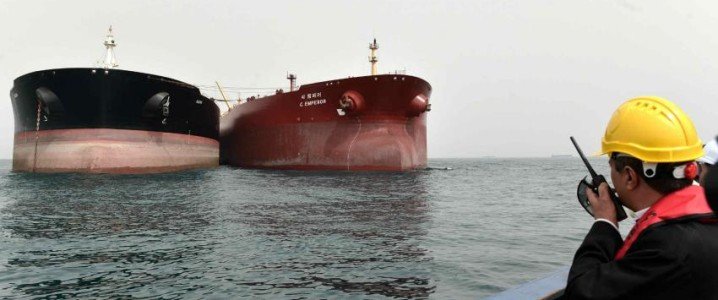
Disrupted fuel supplies around the Gulf are making refuelling slower and dearer for the ships that carry most of the world’s goods, including cargo bound for Ghana.
A supply crunch around the Strait of Hormuz, the narrow waterway at the mouth of the Gulf through which a large share of the world's oil moves, is no longer just an oil-price story. It is now disrupting the market for bunkers \u2014 the fuel that ships themselves burn.
The Ghana Report sets out the picture: fuel is still available globally, but getting the right grade, at the right port, within a timeframe that works commercially, has become much harder.
The numbers behind the squeeze
On 16 October, the trading house Vitol estimated that flows of high-sulphur fuel oil (HSFO) through Hormuz, including Iranian cargoes, were running at least 800,000 tonnes a month below February levels.
Separately, Ukrainian strikes on Russian refineries have taken out an estimated additional one million tonnes a month, while refiners in North Asia were pulling more than a million tonnes of HSFO for November processing. In short, shipowners worldwide are chasing a smaller pool of fuel.
Low-sulphur supplies have had some relief from higher exports out of China and Nigeria, but that has not evened out the market.
Waiting times are stretching
Fujairah in the United Arab Emirates, one of the world's biggest refuelling hubs, shows both recovery and fragility. Reuters reported on 1 October that third-quarter fuel oil imports there rebounded to 2.6 million tonnes from 845,000 tonnes in the second quarter \u2014 yet September imports were still around half of February's level.
Delivery lead times tell a similar story. The bunker intelligence service ENGINE's 13 October outlook put recommended lead times in Singapore at 11 to 18 days for very-low-sulphur fuel oil (VLSFO), up from 10 to 15 days a week earlier. A vessel that needs fuel in three days cannot wait two weeks.
Stock figures can mislead. ENGINE reported Fujairah's heavy distillate and residual stocks averaged 4.72 million barrels in early October, about 5% above September's average \u2014 but much of that fuel is already committed, earmarked for export, or of the wrong specification.
The cost side
Prices have climbed. General Index assessed September VLSFO averages at $872 a tonne in Singapore and $939 in Fujairah, up 6% and 15.9% respectively from August. On a 2,000-tonne purchase, an extra $100 a tonne adds $200,000 \u2014 before any waiting or diversion costs.
That pressure may show up next in credit. If lenders tighten terms, smaller operators could find fuel physically available but financially out of reach.
What it means
Owners are already buying smaller volumes more often and spreading calls to ports such as Port Louis, Colombo and Salalah, Reuters reported on 16 October.
For Ghanaian importers and exporters, the takeaway is simple: no bunker hub has to run dry for schedules to slip and freight bills to rise. Delays and higher costs on long-haul routes eventually reach landed prices at Tema and Takoradi.