The central bank absorbed more than twice the cash it took in at its previous auction, yet barely paid more for it
insight into how much spare money is sitting in Ghana’s banks.
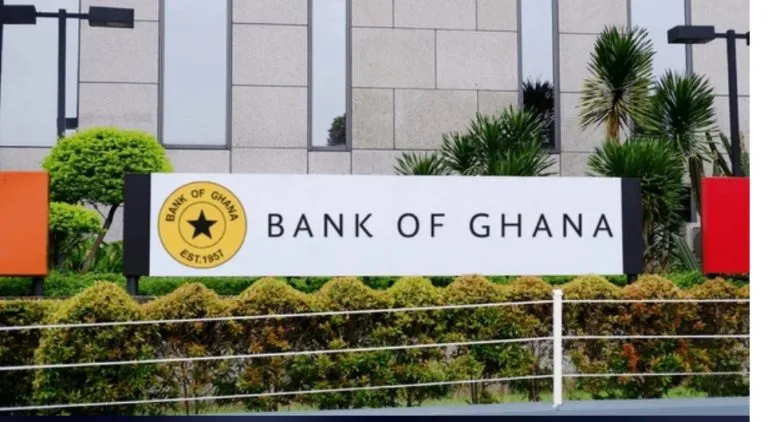
The Bank of Ghana (BoG) sold GH\u00a210.76 billion worth of 14-day bills at its auction on 19 October, more than double the amount it placed just five days earlier \u2014 and it did so without having to offer investors a meaningfully higher return.
Results for Tender 884, reported by Norvan Reports, show the central bank sold GH\u00a210,757.15 million of the short-dated paper. At Tender 883 on 14 October, the figure was GH\u00a24,362.29 million. That is an increase of about GH\u00a26.39 billion, or roughly 146.6 per cent.
Price barely moved
Banks and other institutions bid at discount rates between 10.40 and 10.46 per cent, and the BoG accepted the entire range. The weighted average discount rate came in at 10.45 per cent and the weighted average interest rate at 10.50 per cent \u2014 up just 0.43 of a basis point from the 10.49 per cent recorded on 14 October.
The gap between the lowest and highest bids was only 5.78 basis points, suggesting institutions broadly agreed on what two-week money is worth right now.
What these bills actually are
BoG bills are not Treasury bills. Treasury bills are issued on behalf of government to fund spending and roll over existing debt. Central bank bills are a monetary policy tool: when the BoG believes banks are holding more cash than is healthy for inflation and the cedi, it sells its own paper to lock that money away temporarily.
Because the tenor is 14 days, the money comes back quickly unless it is rolled into a fresh auction. That means the GH\u00a210.76 billion is a gross withdrawal, not necessarily the net amount taken out of the system. Working out the net effect would require knowing how much paper matured around the same date, plus government spending and foreign exchange flows.
It is also worth noting that the 10.4962 per cent annualised rate is a yearly figure. An investor holding the bill for 14 days earns only a small fraction of that.
What is not in the numbers
The published notice does not give an auction target, the total value of bids received, or how many institutions took part. Without those, no one can calculate an oversubscription or bid-to-cover ratio. So the jump in volume could reflect bigger surplus balances at banks, heavier rollover needs, or a deliberate decision by the BoG to absorb more \u2014 the figures alone do not settle it.
The bigger question
The yield on these bills sits below the 14 per cent monetary policy rate, which signals the overall policy stance rather than day-to-day liquidity conditions.
The longer-term concern is behavioural: if banks keep finding risk-free two-week paper more attractive than lending to Ghanaian businesses, the country could end up with monetary stability alongside weak private-sector credit. The next auction, and what happens when this GH\u00a210.76 billion matures, will show whether heavy absorption is becoming the norm.