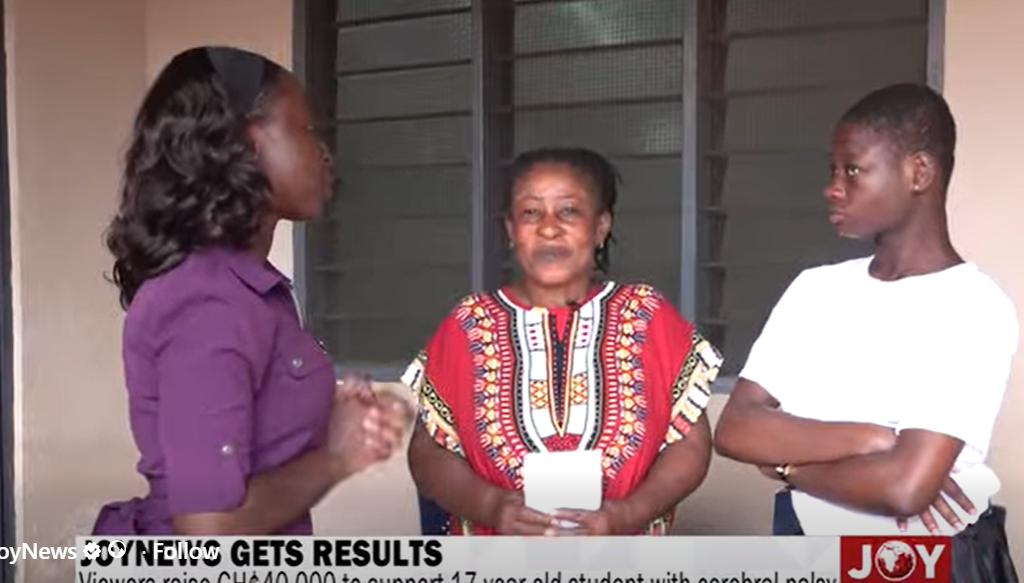
Priscilla Nana Ama Samson, 17, has resumed senior high school after members of the public covered the cost of items her mother could not afford.
A 17-year-old student living with cerebral palsy is back in the classroom after Ghanaians raised about GH¢40,000 to cover the cost of her school needs.
Priscilla Nana Ama Samson had feared she would miss the start of the new senior high school (SHS) term because her mother could not afford the items on her school prospectus — the list of uniforms, beddings, stationery and other personal items each boarding student is expected to bring.
Her case was reported by MyJoyOnline, and the broadcast drew a strong response from listeners and members of the public who contributed towards her education.
From uncertainty to resumption
Before the donations came in, the family faced a real possibility that Priscilla would stay at home. The cost of basic school requirements, rather than her condition or her academic ability, was the barrier standing between her and the classroom.
With the money raised, she has now resumed school and rejoined her peers. Her mother, who had been struggling to meet the expenses of sending her daughter back, has also been relieved of that burden.
The family has thanked the audience that responded and everyone who donated.
Why the prospectus matters
Ghana's free SHS policy covers tuition, feeding and core costs for public senior high schools. But families are still expected to provide the personal items listed on the prospectus, and for households already under financial pressure, that list can be enough to keep a child at home.
For a student living with a disability, the costs can stretch further, since mobility aids, extra support and transport are often not covered by any school arrangement.
Cerebral palsy is a lifelong condition affecting movement, posture and muscle control, usually caused by damage to the developing brain. It does not, on its own, affect a person's ability to learn, and many students with the condition complete school and go on to tertiary education when the right support is in place.
What it means for Ghanaians abroad
Stories like Priscilla's are a common trigger for diaspora giving. Ghanaians in the United States and elsewhere often respond to individual appeals carried by media houses back home, sending money through relatives or directly to families.
The case also points to a gap that one-off donations cannot close. Priscilla's fees and items are covered for now, but the source report does not say whether any long-term arrangement has been put in place for the rest of her secondary education, or whether any state agency has stepped in.
For now, the immediate question of whether she would return to school has been settled, and she has begun the new academic chapter alongside her classmates.