
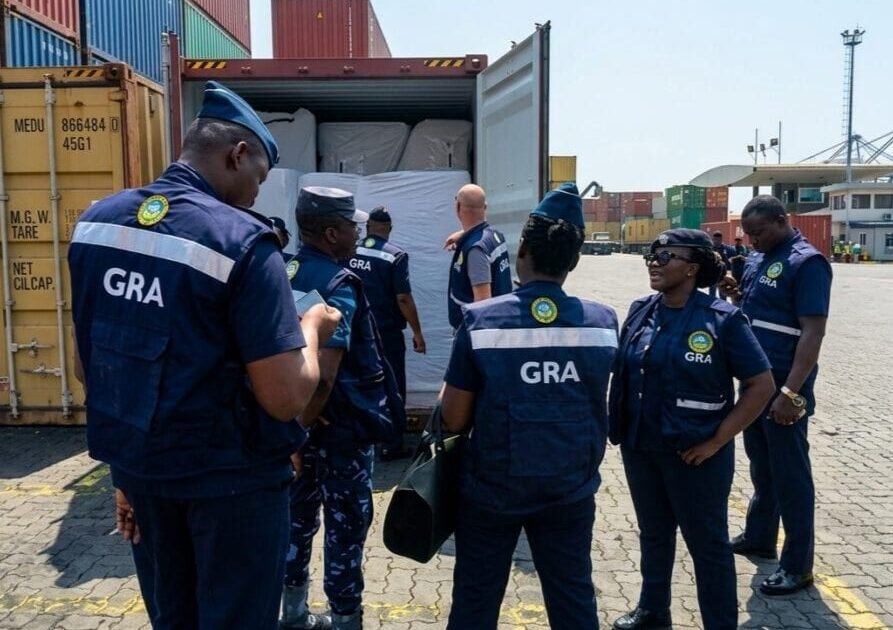
Ghana’s tax administration says better valuation and classification of imports, not new taxes, is behind a jump in monthly customs revenue to about $450 million.
Customs collections in Ghana have risen to roughly 450 million US dollars a month since the Ghana Revenue Authority (GRA) began using artificial intelligence to help value imported goods at the ports.
The figure was given by GRA Commissioner-General Anthony Kwasi Sarpong on the sidelines of the West African Tax Administrators Forum, which Ghana is hosting.
According to him, monthly customs revenue moved from about 350 million dollars to as much as 450 million dollars — an increase of around 100 million dollars every month.
What changed
Sarpong linked the jump to a reform of two technical areas of customs work: valuation, which is how much an imported item is judged to be worth for duty purposes, and classification, which is the code assigned to a good and therefore the rate of duty it attracts.
When those two steps are inaccurate, importers can end up paying less than the law requires. The GRA installed an AI system in April to support valuation at the ports, and the Commissioner-General described the tool as a game changer.
He was careful to stress that the rise did not come from any change in tax policy. "No new taxes, no higher rates," he told the forum, describing the outcome as simply the fair and accurate application of existing rules backed by modern systems and staff integrity.
He added that he was presenting the numbers "not as a boast, but as evidence" that African revenue administrations can deliver results when political will, administrative reform and digital tools come together.
Why this matters
Customs duty is one of government's most reliable sources of cash, because it is collected at a small number of entry points rather than across a wide taxpayer base. An extra 100 million dollars a month, if sustained, is a meaningful shift in how much the state has to spend without asking Ghanaians to pay new levies.
For Ghanaians in the United States who ship goods, vehicles or containers home, the reform is also practical news. Tighter valuation at the ports means declared values are more likely to be tested against the system's own assessment, and duty bills may come in higher than importers expect based on past experience.
The forum
The gathering in Accra is the 8th West African Tax Administrators Forum, and it coincides with the association's 15th anniversary. This year's theme is "Building Stronger Tax Administrations for Revenue Mobilisation and Sustainable Development".
The Forum's Executive Secretary, Jules Tapsoba, said the platform has helped member countries improve revenue collection since it was set up.
The GRA has not published a breakdown of the monthly figures, and the source report does not state how long the higher collections have been maintained.
Reported first by MyJoyOnline on 2026-09-16. This article was written for our readers based on that report. Follow the link for the original coverage.