
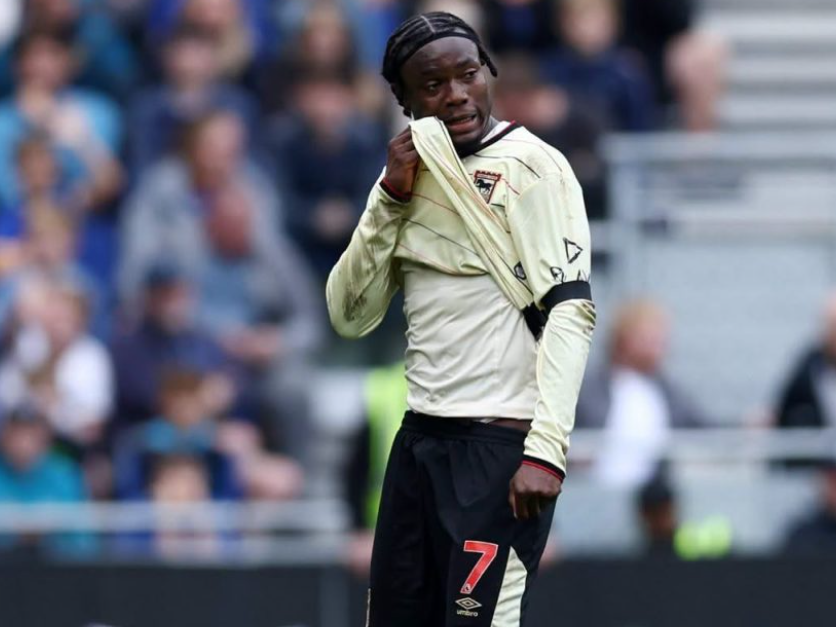
The English club says it is working with the Premier League and other authorities after the 22-year-old Ghanaian was targeted on social media following a red card.
Ipswich Town have publicly condemned racist messages aimed at Ghana winger Abdul Fatawu Issahaku on social media, and say they are investigating alongside the Premier League.
The abuse followed Saturday's 1-0 home defeat to Everton, a match in which the 22-year-old was sent off after picking up a second yellow card for simulation — the offence referees give when they believe a player has tried to win a foul or penalty by pretending to be fouled.
What the club said
In a statement posted on its official account, the club said it was aware of the online abuse directed at the player and made clear where it stands.
"The club finds any form of discriminatory behaviour completely unacceptable and has no place in football," the statement said, adding that the matter was being looked into with the Premier League and other relevant authorities.
The club also said it would continue to give Fatawu "our full support".
Adom Online reported the club's response and the circumstances around the match.
Who is Abdul Fatawu Issahaku
Fatawu is one of the Ghanaian players currently based in England's top flight. He moved to Ipswich Town from Leicester City during the summer transfer window.
The winger is 22 and is known to Black Stars followers from his performances for Ghana at youth and senior level. For many Ghanaians watching from home or from the United States, Saturday matches involving players like Fatawu are a weekly fixture, which is part of why the abuse has drawn attention beyond England.
Why this matters
Racist abuse of footballers on social media has been a recurring problem in English football, and clubs now routinely refer cases to the league and to law enforcement rather than treating them as a matter for the player alone.
By saying it is working with the Premier League and the relevant authorities, Ipswich are following that route. What that usually means in practice is that the club gathers the offending posts and passes them on so that accounts can be traced and, where the law allows, action taken against those behind them.
The club has not said how many accounts were involved, whether the messages have been reported to police, or how long the investigation may take. Neither the Premier League nor Fatawu himself has issued a public statement on the matter at the time of writing.
What happens next
Attention now turns to the outcome of the investigation and to Fatawu's availability. A second yellow card in a match means a red card, which ordinarily carries a suspension, though the club has not announced how many games he will miss.
NewsPulse GH will follow the story as more details emerge from the club and the league.