Wamkele Mene says African businesses lose billions each year converting to the US dollar just to trade with each other, and fixing payments, borders and infrastructure is now the real test of the free trade deal.
A business in Accra selling to a buyer in Nairobi often cannot simply pay in cedis and receive Kenyan shillings. Instead, both sides usually buy a third currency, normally the US dollar, to close the deal.
That detour costs African businesses roughly US$5 billion a year in currency conversion charges, according to Wamkele Mene, Secretary-General of the African Continental Free Trade Area (AfCFTA) Secretariat, which is headquartered in Accra.
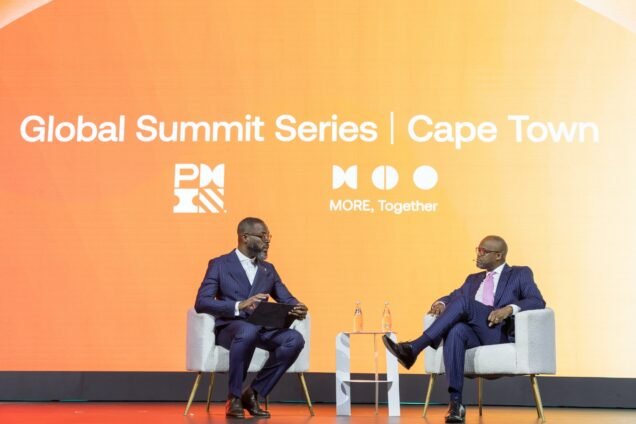
Mene made the point at the Project Management Institute (PMI) Global Summit Series in Cape Town, South Africa, in a conversation with George Asamani, PMI's Managing Director for Sub-Saharan Africa. The Ghana Report carried an account of the discussion.
Payments first
Mene pointed to the Pan-African Payment and Settlement System (PAPSS) as the practical fix. PAPSS was developed by the African Export-Import Bank (Afreximbank) working with the AfCFTA Secretariat, and it allows businesses in different African countries to settle payments in their own local currencies rather than routing through the dollar.
For Ghanaian exporters, that matters directly. Every conversion step adds cost and exposes traders to exchange rate swings, which has been a persistent concern for firms dealing in cedis.
Borders, customs and policy alignment
Signing a trade agreement is one thing; using it is another. Mene said the priorities now are aligning national policies with continental commitments, modernising customs operations and making cross-border payments work.
"We all have a contribution to creating a single integrated market," he said, calling on professionals in infrastructure, construction, agriculture, services and customs to bring their expertise to the integration effort.
Asamani framed the same point in delivery terms. "A continental agreement becomes meaningful when a business can use it," he said, arguing that this depends on people who can coordinate institutions, manage risk and deliver reliable systems.
Protecting local industry
Mene also responded to a worry common in Ghana and across the continent: that opening borders will expose young local manufacturers to bigger competitors.
He said the agreement carries safeguards. "We have rules that protect infant industries in a country," he said, adding that adjustment support can help sectors that face disruption as markets open. He stressed the need to measure potential losses and assist affected firms, with domestic reform running alongside continental cooperation.
Infrastructure and digital trade
On infrastructure, Mene urged more attention to project preparation and to trade-related infrastructure, alongside digital investment. He highlighted the Digital Trade Protocol as a way to create conditions for investment in emerging technologies and data centres.
His broader argument was that roads, payment platforms, customs systems and digital services have to connect with one another. A completed asset that does not link into the systems around it delivers less value.
For Mene, the measure of AfCFTA's success is simple: whether a business can enter a new African market at lower cost and with less paperwork than before.