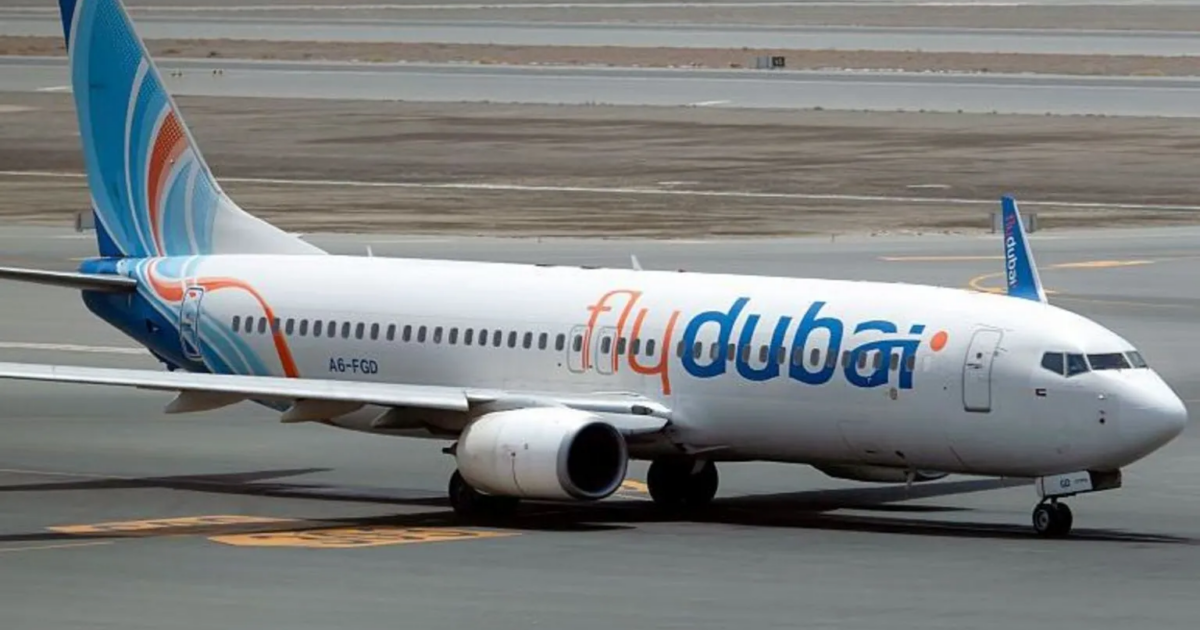
About 150 passengers ended up in Tabuk instead of Tel Aviv after Israeli officials said one pilot stabbed the other mid-flight.
A Flydubai passenger jet heading from Dubai to Tel Aviv was forced to land in Saudi Arabia on Wednesday after what Israeli officials described as a violent confrontation between the two pilots in the cockpit.
Flight FZ1073 left Dubai International Airport in the United Arab Emirates early in the morning carrying roughly 150 people, most of them Israelis. It was scheduled to land at Ben-Gurion Airport near Tel Aviv. Instead it came down at Tabuk Airport in north-eastern Saudi Arabia.
What happened in the air
About two hours into the flight, the aircraft transmitted an emergency code, according to Flightradar24, a website that tracks aircraft movements using publicly broadcast signals. Minutes later that signal was changed to the code used to report a hijacking, before being switched back to the general emergency code.
Tracking data cited in reporting by MyJoyOnline shows the plane dropped more than 17,000 feet, over 5,000 metres, in under two minutes shortly after 05:21 UTC. At 05:40 it briefly crossed into Jordanian airspace, then turned back into Saudi airspace and began its approach for landing.
Israeli media, quoting officials, reported that one pilot stabbed the other and was then restrained. Passengers on board also spoke to Israeli news outlets about a stabbing. Those accounts have not been independently confirmed.
Airline and government response
A Flydubai spokesperson said the flight "experienced an incident while en route" and that the airline's teams are "working closely with the relevant authorities". The company said more information would be released as it becomes available.
On the Israeli side, the air force sent fighter jets up in response to the emergency signals, and Prime Minister Benjamin Netanyahu called urgent consultations. Netanyahu later said in a statement that the situation was under control and that arrangements were being made to bring the Israeli passengers home from Saudi Arabia.
Why it matters
For Ghanaians who travel through Dubai, one of the busiest connecting hubs for passengers moving between West Africa, the Middle East and Asia, the case is a reminder of how quickly a routine route can be disrupted by an event inside the cockpit rather than outside it.
It is also unusual for a commercial aircraft carrying mostly Israeli passengers to land in Saudi Arabia, which does not have formal diplomatic relations with Israel. The diversion means both governments had to handle the aftermath directly.
What happens next
The key questions still open are the condition of the injured pilot, what triggered the confrontation, and which authority will lead the investigation. Flydubai has promised further updates, and any formal inquiry would likely involve regulators in the United Arab Emirates and Saudi Arabia.