The Traditional Medicine Practice Council says nearly every massage facility it inspected in Kumasi was operating without a licence.
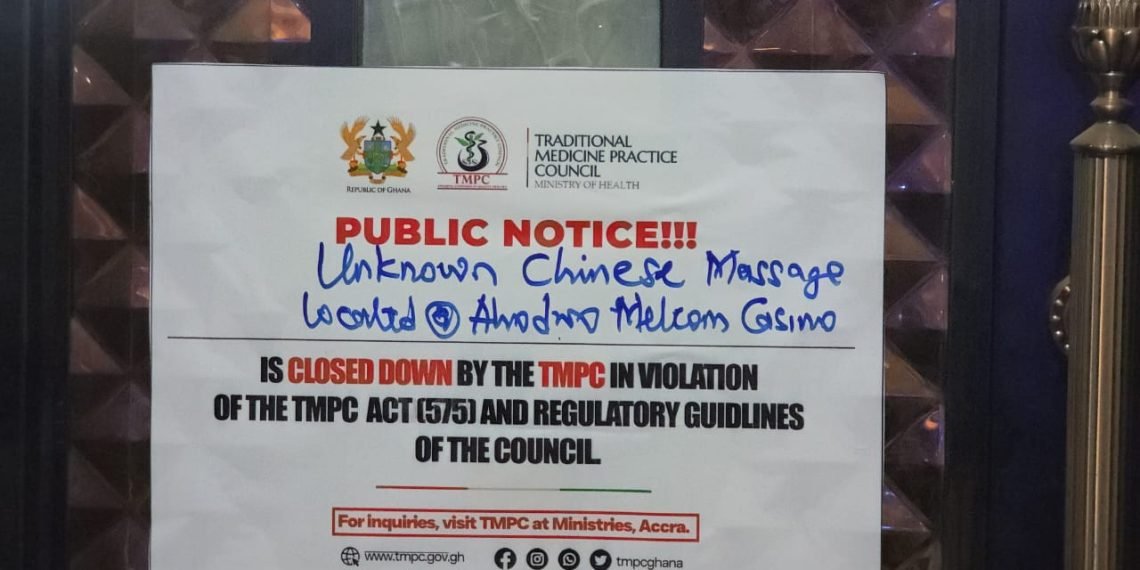
Three massage spas run by Chinese nationals in Kumasi have been closed by the Traditional Medicine Practice Council (TMPC), the state body that regulates traditional and alternative medicine practice in Ghana, after inspectors found they had no licence to operate.
The facilities are located at Ahodwo and Daban, two areas within the Kumasi Metropolis in the Ashanti Region. They were shut during an enforcement exercise that targeted massage therapy centres, spas and similar businesses. Adom Online, citing Citi News, reported the closures.
What inspectors found
The Council's Ashanti Regional Regulation Officer, Divine Azraku, said the operators had opened for business without first obtaining a TMPC licence, which is a legal requirement before such a facility can serve clients.
He said the problem went well beyond the three spas that were closed. Almost none of the facilities visited during the exercise could produce the Council's licence, he told Citi News. Enforcement officers locked up the affected businesses and placed caution notices at the entrances so that customers would know the premises were not cleared to operate.
"Most of them were Chinese. They were more or less like foreign nationals who were operating in that space," Mr Azraku said, adding that such operators must hold a TMPC licence before trading.
What the law requires
Mr Azraku set out the basic paperwork anyone must have before opening a spa or massage centre in Ghana. First is a business operating permit, which is issued by the local assembly. Then the operator needs an association card or proof of proficiency, plus documents showing genuine experience in the profession.
That last requirement matters because massage therapy sits under the traditional and alternative medicine space, where untrained hands can cause real harm to clients.
What happens next
The closed spas are not banned permanently. According to Mr Azraku, the operators have been told to regularise their status by completing the required registration steps. They will also have to pay fines for operating without authorisation.
Once the fines are settled and the registration is complete, he said, the Council will reopen the premises.
He was careful to say the exercise was not an attack on the industry itself. "We are not against the practice," he said, explaining that the Council simply wants every practitioner to hold the proper documentation.
Why it matters
For readers in Ghana, the message is practical: a spa that cannot show a TMPC licence has not been vetted, and clients have little protection if something goes wrong.
For Ghanaians abroad who invest in small service businesses back home, often through relatives or partners, the case is a reminder that licensing in the health and wellness space is enforced, and that fines follow non-compliance.