A crime-fighting law in Trinidad and Tobago has sparked a press freedom fight over whether police can seize reporters’ phones and notebooks.
Journalists in Trinidad and Tobago are demanding changes to a new law that widens police powers of search and seizure, warning that it could expose their phones, laptops, notebooks and confidential sources to police hands.
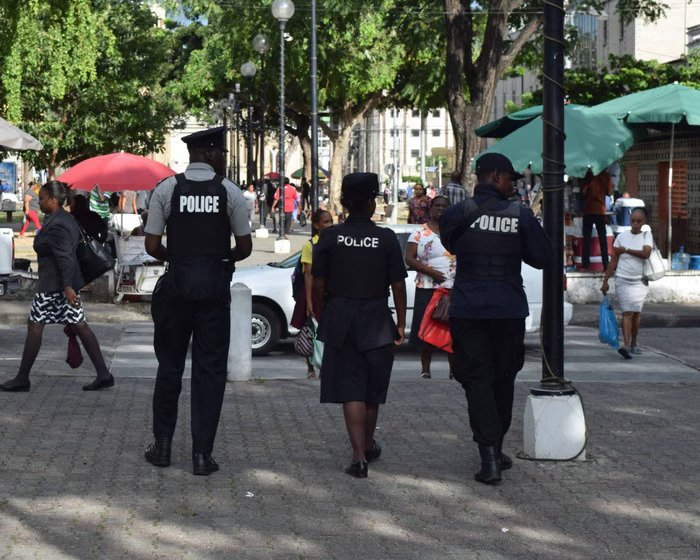
The Special Operations Bill 2026 was passed on 24 September. The government says it is aimed at bringing down high crime and murder rates in the Caribbean country, which has spent more than a year under what amounts to a near-continuous state of emergency. During that period, police have been able to set aside normal constitutional protections around arrest, detention and search.
The clause at the centre of the row
The Media Association of Trinidad and Tobago (MATT), the country's main body for journalists, wants clause 15 of the bill amended.
As written, that clause stops police from seizing "a tool of a lawful trade or business" or material covered by legal professional privilege. MATT's problem is that journalism is not named anywhere as a protected trade, and the bill sets out no procedure for what police should do if they come across confidential journalistic material during a search.
The association's president, Prior Beharry, said the clause should be changed to "expressly name journalism as a protected lawful trade and safeguard journalists' devices, materials and confidential sources". He noted that in practice today, "the tools of a journalist is \u2026 usually a cell phone", which makes broad seizure powers especially risky.
The Ghanaian Times, citing reporting by The Guardian, said journalists in the country have previously had to go to court to challenge warrants allowing police to raid their homes and offices.
A sharp fall in the rankings
Trinidad and Tobago has long presented itself as a strong performer on free expression. It placed 19th out of 180 countries in the 2025 press freedom index compiled by Reporters Without Borders, an international media rights group. This year it dropped 13 places to 32nd.
Beharry said reporters had not been directly targeted under the recent states of emergency, but he pointed to a separate squeeze: access to officials. He said the prime minister had not held an official press conference in over a year, and complained that ministries hold events using state resources where independent outlets are left out while state media are invited.
Independent journalist Pearce Robinson argued that the mix of surveillance tools, wider search powers with no clear protection for journalistic work, and shrinking access to ministers adds up to what he called a "concrete" threat, with investigative reporting hit hardest.
Why Ghanaians may be watching
The argument in Port of Spain is a familiar one in many democracies, including Ghana: how far security laws passed to fight violent crime should reach into the work of the press, and whether protections for sources need to be written into the law rather than assumed. For now, MATT is pressing for the amendment rather than the scrapping of the bill.