
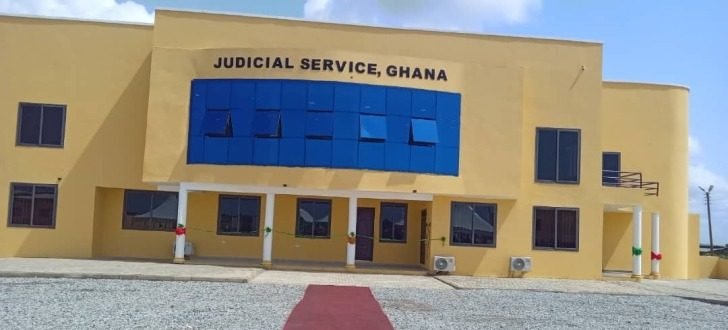
Court staff say they are still waiting for their 2026 pay adjustment ten months into the year, raising the risk of disruption to court business.
Staff of Ghana's courts have formally put the government on notice that they may lay down their tools over a salary review that is nearly a year overdue.
The Judicial Service Staff Association of Ghana (JUSAG), the body that represents workers of the Judicial Service, has written to the National Labour Commission (NLC) \u2014 the state agency that handles disputes between workers and employers \u2014 declaring its intention to embark on industrial action.
The letter is dated 23 October 2026. The Ghana Report first carried details of the notice.
What the dispute is about
JUSAG says the pay and conditions of Judicial Service staff are set under Article 149 of the 1992 Constitution and the Judicial Service (Terms and Conditions of Service) Regulations, 2025, known as C.I. 141. Those rules provide for salaries to be reviewed every year.
According to the association, it asked for the 2026 review in December 2025, right after the previous one expired. The Judicial Council finished its work and sent recommendations to the President.
Since then, JUSAG says, little has moved. It wrote follow-up letters to the Judicial Council in January 2026 and again in September 2026.
The association also says it raised the matter publicly at its delegates' conference in Tamale in August and at staff meetings in Accra and Tamale in September. Those efforts, it says, produced assurances but no approval and no payment.
Why staff are angry
The sharpest complaint in the notice is about fairness. JUSAG points out that other public sector workers received their approved 2026 salaries back in January, while court staff are still waiting with the year already in its tenth month.
The association says the delay has worn down morale and raised tensions among members, especially now that organised labour has already started talks on the base pay for 2027. In other words, negotiations have moved on to next year while judicial staff are still chasing this year's money.
JUSAG says its leadership has repeatedly asked members to hold back, because a shutdown of court work would affect justice delivery and, by extension, national security.
What happens next
The association is asking for the revised salaries and allowances to be approved and paid promptly so the matter does not escalate further.
The notice to the NLC is the formal first step. Under Ghana's labour framework, the Commission can step in to try to settle the dispute before any strike begins.
For Ghanaians abroad with property disputes, estate matters, probate applications or other cases before the courts, a strike by Judicial Service staff would be felt directly. Court registries, filing and record-keeping depend on these workers, and any stoppage would slow down cases that are already moving at their own pace.
No date has been announced for the start of any industrial action.