
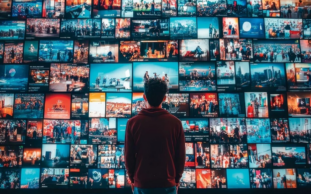
A commentary published this week argues that Ghanaian audiences are drowning in alerts but starved of the background that makes news make sense.
Most of us now meet the news before we finish breakfast. A phone buzzes with a conflict somewhere, then a currency figure, then a political decision made thousands of kilometres away. We learn that something happened. Whether we understand it is another matter.
That gap is the subject of a commentary published by The Ghana Report, which argues that the central problem of the information age is not scarcity of information but scarcity of understanding.
Fragments instead of pictures
The piece makes a simple point: we increasingly take in the world in pieces. A headline. A short video. A viral post. A one-line comment. Each of these can capture a moment, but none of them carries the history, the forces or the human lives sitting behind that moment.
The result, the commentary says, is that people can argue fiercely about the same event while carrying completely different accounts of it in their heads. The missing ingredient is often not facts. It is context — the thing that links events together, explains what caused them and shows what follows.
Two examples close to home
The article uses food prices as its first illustration, and it is one Ghanaian households will recognise immediately. The lived experience is straightforward: prices climb, the household budget tightens. But behind that are climate change, disrupted supply chains, energy markets, conflicts abroad and policy decisions taken far from the market where the shopping is done. Without context, you see the problem. With context, you start to understand it.
Migration is the second example, and it matters for Ghanaians abroad as much as those at home. Public debate is often driven by a single powerful image of people at a border. That image is real, the commentary argues, but it is one frame from a much longer journey shaped by conflict, economic pressure, environmental stress and the search for safety or work. When the context drops away, people stop being people and become symbols.
Speed, AI and the skill that matters
Social media moves information instantly, but speed is not the same as accuracy. A misleading claim can outrun a careful explanation, and an image can settle opinions before anyone checks where it came from.
Artificial intelligence — software that can now produce convincing text, images and video in seconds — raises the stakes further. As the commentary puts it, the easier it becomes to generate content, the more valuable the ability to interpret it becomes. Machines can make material; judgement about what it means remains human work.
That is why the piece lands on critical thinking as the skill of the moment, and on education as the place to build it — teaching people not just to gather facts but to question and connect them.
Breaking news still matters. It tells us what happened. The harder questions — why, who is affected, what next — begin after the alert.