
Ghana’s geoscience regulator says the rules, in force since August, finally give practical effect to a law passed a decade ago.
Geological activity in Ghana is now governed by a fuller set of rules, after seven Legislative Instruments (L.I.s) took effect to put the Ghana Geological Survey Authority Act, 2016 (Act 928) into practical operation.
The instruments came into force on August 26, 2026, once they had completed the 21 parliamentary sitting days that the Constitution requires before such subsidiary legislation matures into law.
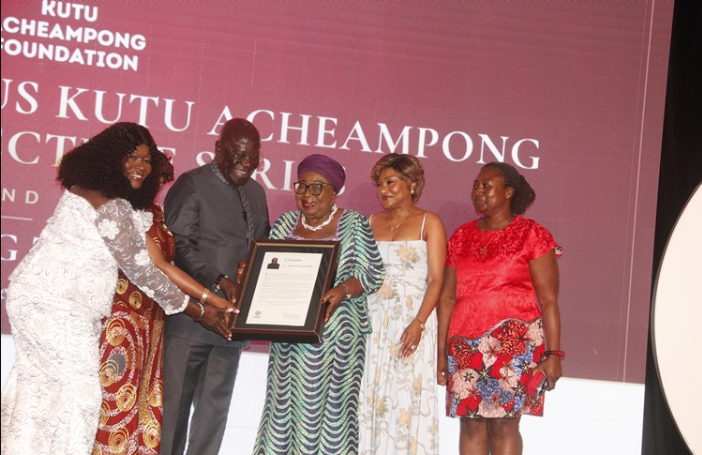
The Director-General of the Ghana Geological Survey Authority (GGSA), Dr Prosper Nduah Akaba, announced the development at the Progress Series organised by the Ministry of Lands and Natural Resources, where he reviewed the authority's work and its ongoing programmes. He described the maturing of the instruments as one of the most important things the authority achieved this year. Ghanaian Times reported his remarks.
What the GGSA does
The GGSA is the state body responsible for geological survey work in Ghana — mapping the country's rocks, minerals, soils and groundwater, and advising on geological hazards such as landslides, earth tremors and ground instability. It was established under Act 928, but a law of that kind usually needs Legislative Instruments to spell out licensing, standards, fees and enforcement procedures before it can be applied day to day.
That gap between a parent Act and its regulations is common in Ghana, and it is why the authority has treated the seven instruments as a milestone rather than a routine administrative step. Until regulations exist, a regulator often has limited power to set binding conditions or sanction non-compliance.
Why it matters
The authority says the new rules are meant to bring stricter regulation to geological activities and improve accountability in the sector. Geoscience data underpins mining exploration, construction, road and dam projects, water drilling and disaster risk planning — areas where poor or unverified data carries real cost.
For Ghanaians abroad who invest in property or follow the mining sector, the practical significance is in the standards that regulations typically impose: who may carry out geological and geotechnical work, how results are reported, and what records the state keeps.
What is not yet clear
The detailed content of each of the seven instruments — the specific activities covered, the licence categories, fees and penalties — was not set out in the account of Dr Akaba's presentation. Those details would be contained in the published instruments themselves.
Attention now turns to how the GGSA enforces the new framework, and whether it has the staffing and laboratory capacity to apply it across the country's mining districts and fast-growing construction zones.