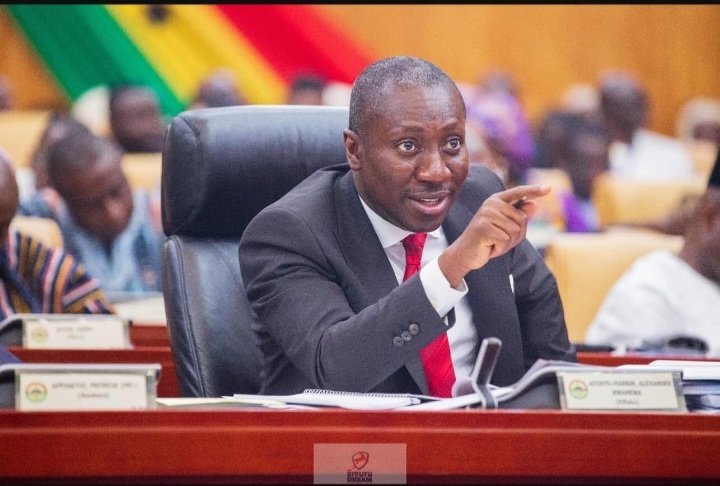

A new directive from Dr Dominic Ayine tells investigators how suspects must be arrested, detained, questioned and publicised — and warns that tainted cases may never reach court.
Ghana's Attorney General and Minister of Justice, Dr Dominic Akuritinga Ayine, has issued a formal directive to the Police Criminal Investigations Department (CID) and other law enforcement bodies setting out how criminal investigations and the handling of suspects must be conducted.
The document, dated November 2, 2026 and signed by Dr Ayine himself, lays down binding principles and procedures for every investigative and law enforcement agency in the country, covering the full chain from arrest to the point where a suspect is handed over for prosecution.
What the directive covers
According to reporting by the Ghanaian Times, the directive addresses arrest, detention, interrogation, the laying of charges and the public parading or publicising of suspects — practices that have long drawn criticism from lawyers and rights advocates in Ghana.
The stated aim is to correct recurring habits in criminal investigations that fall below the standards set by the Constitution. It has been described as the most far-reaching attempt in recent years to reform how police investigators and other security agencies deal with people in their custody.
It also forms part of a wider package of criminal justice reforms the Attorney General has been pursuing.
Evidence obtained by force
One of the firmest parts of the directive deals with how evidence is gathered. It states that the Office of the Attorney General will not put its authority behind a prosecution built on evidence obtained through torture or coercion.
Where a serious breach of the law has tainted a case, the Attorney General may decline to prosecute altogether, or discontinue a case already before the courts. In practice, that means an investigation that cuts corners could collapse before it reaches trial, regardless of how serious the underlying allegation is.
Consequences for officers
The directive does not stop at instructions. It requires the heads of all security and investigative agencies to take disciplinary action against officers who breach its terms.
Where a breach also amounts to a criminal offence, the agency head is directed to refer the officer concerned for independent investigation and possible prosecution.
Why it matters
For Ghanaians at home, the directive speaks to familiar complaints: suspects held beyond lawful limits, confessions extracted under pressure, and accused persons displayed publicly before any court has heard the case.
For Ghanaians in the United States and elsewhere who follow legal and security developments back home — including those with family members caught up in investigations — the directive signals that the Attorney General's office is prepared to use its prosecutorial discretion as a check on investigators.
The practical test will be enforcement: whether agency heads actually discipline officers who fall short, and whether prosecutions are in fact dropped when due process has been ignored. The source report does not indicate a timeline for reviewing compliance.