The opposition party’s stance puts it at odds with government and the Constitutional Review Committee on one of the biggest reform proposals on the table.
The New Patriotic Party (NPP) has come out against the plan to stretch Ghana's presidential term from four years to five, saying the current arrangement should be left as it is.
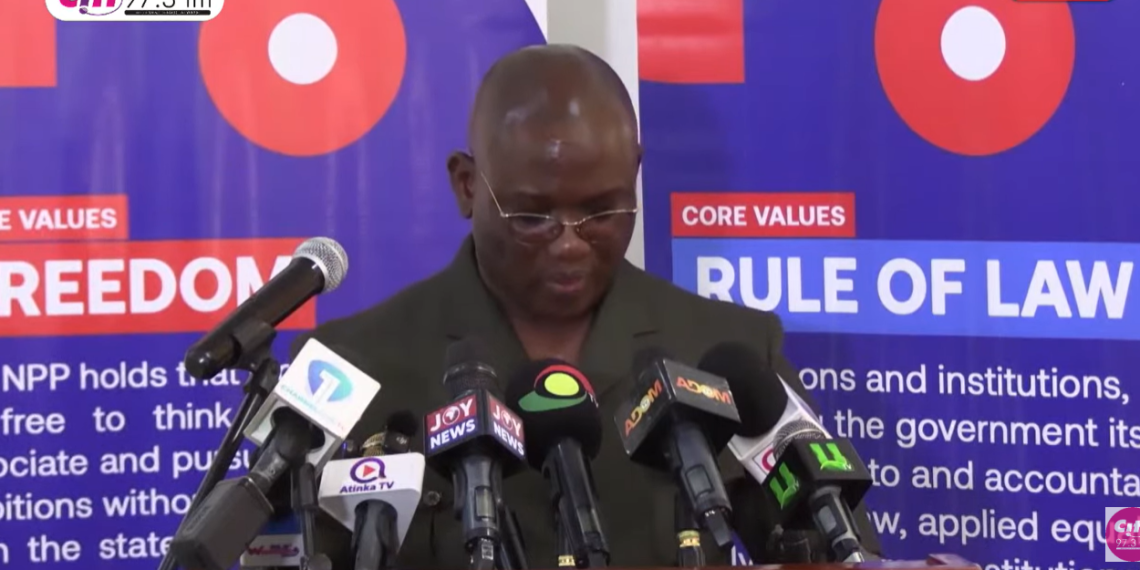
The party's position was made public at a press conference on Thursday, 17 September 2026, by the Member of Parliament for Gushegu, Sulemana Tampuli Alhassan.
"We do not support the extension, and we support the retention of the existing four years," he said, noting that the party had landed on a different conclusion from both the government and the Constitutional Review Committee (CRC), the body set up to review the 1992 Constitution and recommend changes.
Where the proposal came from
The CRC recommended the five-year term as part of a broader package of constitutional reforms. Its final report was handed to President John Dramani Mahama in December 2025.
In July 2026, the government accepted that recommendation. It also accepted a matching change for the legislature, which would take the term of Parliament from four years to five as well.
Government's argument is practical: a four-year cycle, it says, does not give an administration enough room to design a policy, roll it out and then assess whether it worked before the next election arrives.
The NPP's counter-argument
The NPP's objection is about accountability. Tampuli said the four-year mandate gives voters a regular opportunity to assess how an elected government has performed and to decide whether to keep it in office or remove it.
"Extending the term weakens the principle of regular accountability," he said.
He accepted that there are genuine problems in the system, pointing to policy implementation, presidential transitions and the time it takes to form a government. But his argument is that those problems call for faster decision-making and better efficiency, not a longer stay in office.
Why it matters
Any change to the length of the presidential term would require amending the 1992 Constitution, which means the debate will not be settled by a press conference. With the two largest parties now publicly on opposite sides of the question, the proposal is likely to dominate the next phase of the constitutional reform conversation.
For Ghanaians in the United States and elsewhere abroad who follow national politics closely and vote when they are able to, the outcome would directly affect how often general elections are held, and therefore how often the diaspora is asked to weigh in on the direction of the country.
The source report does not indicate a timeline for when the government intends to move the proposal forward, or whether Parliament has begun any formal process on it.
Reported first by Adom Online on 2026-09-17. This article was written for our readers based on that report. Follow the link for the original coverage.