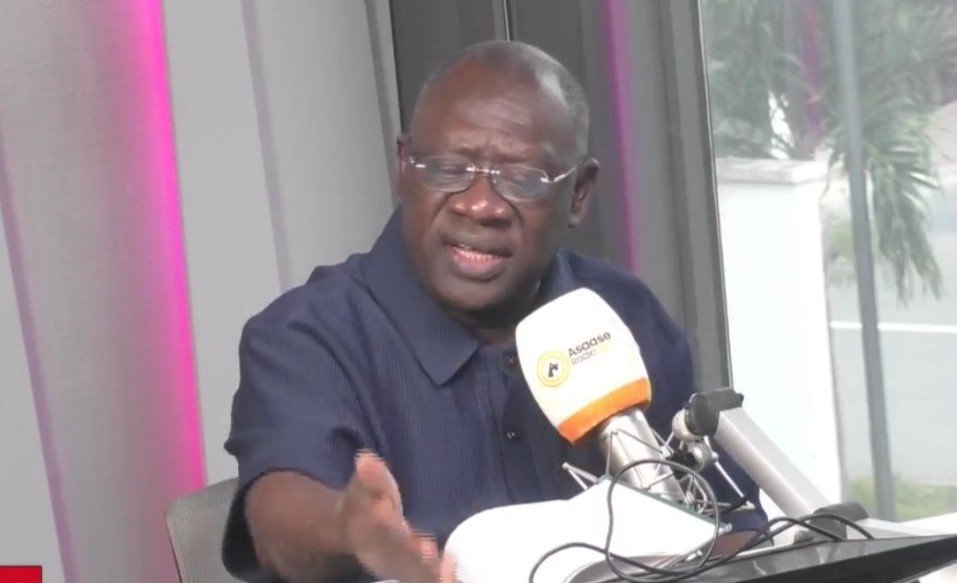
Osei Bonsu Amoah says Ghana’s cybersecurity law was meant for serious crime, not for chasing people who share jokes on social media.
A former Member of Parliament for Akuapem South, Osei Bonsu Amoah, has questioned how Ghana's cybersecurity law is being applied to social media users, saying the police response in recent cases does not match the alleged offences.
Speaking on The Forum on Asaase Radio on Saturday, 19 September, Amoah focused on the scale of the arrests rather than the law itself.
"Is the person a coup maker? Is the person a murderer?" he asked, describing operations in which suspects accused of publishing false information are picked up at dawn by about a dozen armed officers.
He argued that the legislation was designed for serious offences. In his words, the act was put in place "for high crime", not for "petty things about people sharing jokes".
The case that triggered the debate
Amoah was reacting to the arrest of Salomey Awiti Baffoe, a 40-year-old senior nursing officer. She has been charged with abetment of crime, to wit publication of false news.
Baffoe has pleaded not guilty. She was remanded into police custody and is expected back before the Adenta Circuit Court on 30 September.
Police say she helped recruit people to redistribute videos made by TikTok user Barbara Asantewaa Kodua, better known online as "Ghana Jollof". Investigators also say money moved between the two women and that those transactions are linked to the matters under investigation.
Kodua herself has been declared wanted. Police believe she is currently in the United Kingdom.
None of the allegations against Baffoe has been proven in court.
Women and online arrests
Amoah also drew attention to the number of women he said had been arrested recently over online activity, noting that one is in prison.
"I think the women should rise up," he said.
His broader point was about proportionality: that enforcement of laws governing online speech should match the seriousness of the conduct being investigated.
Echoes of criminal libel
The former MP linked the current situation to Ghana's old criminal libel regime. Parliament repealed the criminal libel and sedition laws in 2001, ending prison terms for defamation while leaving civil remedies, such as suing for damages, in place.
Amoah argued that what was removed then is creeping back through other channels, saying what was left out of the criminal libel law "is being abused".
He also referenced concerns raised by the parliamentary Minority over provisions on online communication, noting that some MPs have called for parts of the law to be repealed.
Why it matters
For Ghanaians abroad, the case has an extra edge. Kodua is said to be outside the country, yet people in Ghana connected to her content are facing charges here. That raises practical questions about how far Ghanaian authorities will go in pursuing content posted from overseas, and who carries the legal risk at home.
The next court date, 30 September, will be the first real test of the prosecution's evidence.