
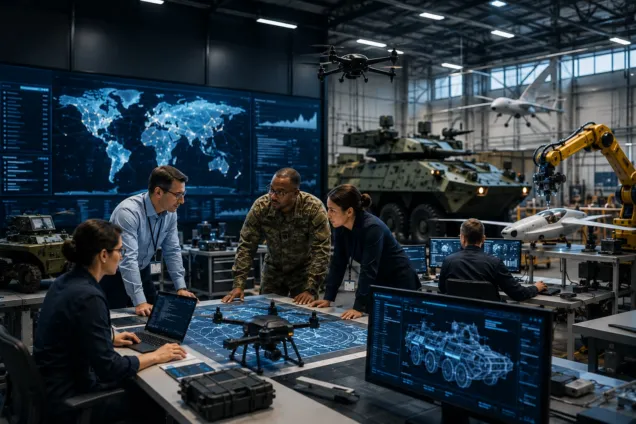
A commentary published in Ghana makes the case that how fast a country turns research into usable military capability matters as much as the size of its arsenal.
A commentary carried by The Ghana Report argues that modern defence planning has moved beyond simply following procurement rules, and that the countries able to move new technology from the laboratory to the field fastest will hold the real advantage.
The piece, written as an opinion contribution, does not focus on a single country's armed forces. Instead it sets out a broad argument about how defence establishments are adapting after recent conflicts and the COVID-19 pandemic.
The core argument
The writer's central point is that conflict has shown the speed of adopting and using new technology can shape military results just as much as conventional firepower does.
On that reading, meeting procurement procedures and technical certification is no longer enough. Armed forces, the piece says, need to spot promising technologies early, test them properly, and put them into service before the operational need changes.
Governments turning to universities and firms
The commentary notes that many governments are widening cooperation with technology companies, universities and research institutions to build quicker routes from research and development into military use.
It points to NATO — the North Atlantic Treaty Organisation, the military alliance of North American and European states — as an example. Two of its vehicles are named: the Defence Innovation Accelerator for the North Atlantic, known as DIANA, and the NATO Innovation Fund.
According to the piece, these support work on artificial intelligence, quantum technologies, autonomous systems, biotechnology and resilient communications, and link innovators to defence organisations across the alliance. The aim is faster adoption of emerging technology and stronger readiness.
Supply chains as security
The article also argues that industry itself is changing, with digital engineering, advanced manufacturing and advanced simulation cutting development timelines and improving how systems are designed, tested and produced.
One of its strongest claims concerns supply chains. Drawing on experience from the pandemic and recent wars, the writer says the ability to keep producing and supplying critical military equipment is now treated as a strategic part of national security in its own right — not a back-office logistics question.
People still matter
The piece is careful to say technology by itself does not win anything. Skilled personnel, experienced leadership and realistic training remain necessary for new capabilities to be absorbed properly, it argues, and continued investment in people is what allows advanced systems to be used responsibly under pressure.
Its closing position is that nations which shorten the distance from research to deployment, deepen cooperation between government, industry and academia, and build a highly skilled workforce will be better placed to deter aggression and respond to new threats.
For readers following Ghana's own defence and industrial policy debates from home or abroad, the argument is a general one, and the commentary does not set out specific recommendations for Ghana.