Preliminary studies say the project is viable, and a step-by-step plan has been agreed for getting a new Ghanaian carrier off the ground.
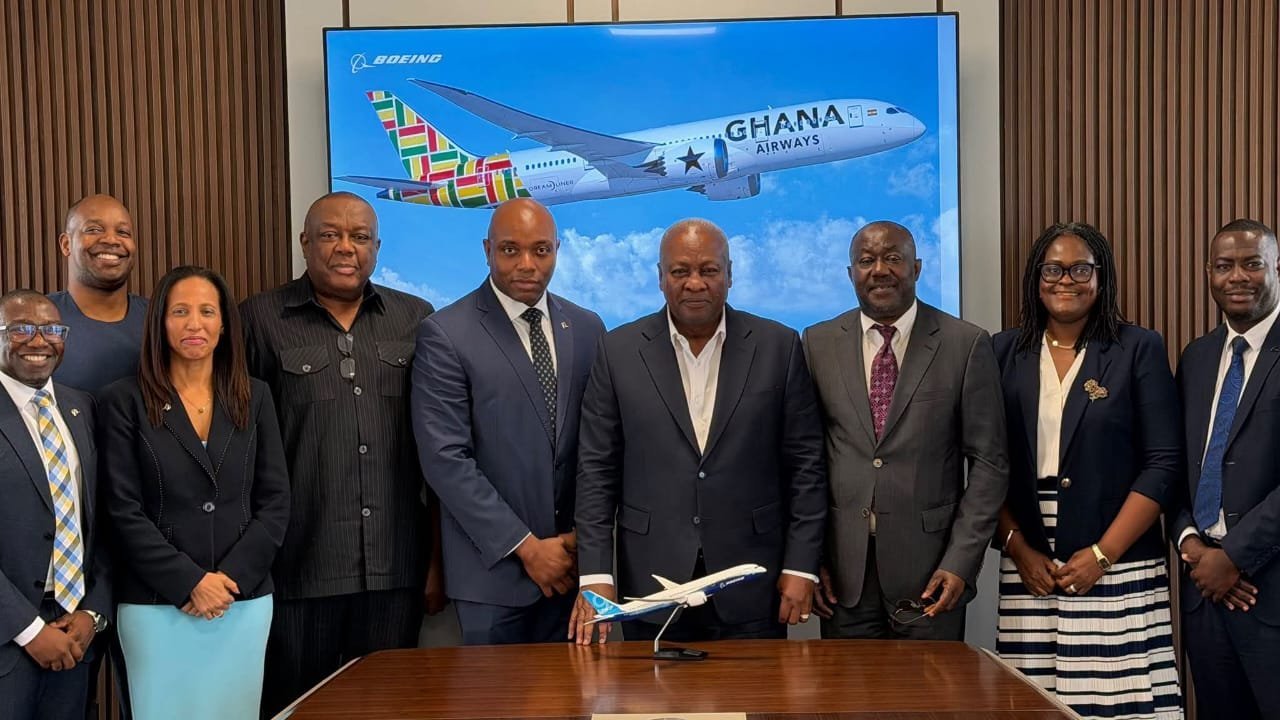
President John Dramani Mahama has met officials of Boeing, the American aircraft manufacturer, as Ghana pushes ahead with plans to put a national airline back in the sky.
The Ghanaian Times reports that Boeing is supporting Ghana's bid to re-establish the carrier, and that preliminary studies have already confirmed the project is viable.
What was agreed
The two sides settled on a road map for setting up the airline. According to the plan, Ghana will look for a strategic airline partner as well as a technical partner.
The road map also covers the acquisition of an Air Operators Certificate — the licence a regulator issues before a company may legally fly passengers commercially — along with decisions on which aircraft to buy or lease and how the whole venture will be financed.
The Boeing team told the President it would stay involved beyond the planning stage, offering support through the establishment of the airline and into its operations.
Why a national carrier again
Ghana has spent years talking about restoring a flag carrier, and the argument this time is tied to infrastructure that already exists. The new airline is expected to increase the use of Ghana's upgraded airport facilities, which currently depend heavily on foreign carriers for traffic.
It also feeds directly into President Mahama's stated ambition of turning Accra into the leading aviation hub in West Africa — a position that would put the capital in competition with cities such as Lagos, Abidjan and Dakar for connecting traffic.
The jobs question
The project is being presented partly as an employment play. Thousands of jobs are expected across the aviation industry, including roles for pilots, cabin crew, aeronautical engineers and aviation management specialists.
That matters for a sector where many trained Ghanaian aviation professionals have had to look abroad for work, with foreign airlines and Gulf carriers absorbing talent trained at home.
What it means for Ghanaians abroad
For the Ghanaian community in the United States and elsewhere in the diaspora, the long-term interest is in route options and pricing. A national carrier with a strategic airline partner could, in time, change how travellers connect between Accra and major international cities, though no routes, aircraft types or launch dates have been announced.
What happens next
The immediate steps are commercial and regulatory rather than visible: finding the strategic and technical partners, securing the Air Operators Certificate, choosing a fleet and locking down financing.
No timeline has been made public for any of those milestones, and no figure has been attached to the cost of the project.