Renewed combat in Tigray, Afar and Amhara is straining the 2022 peace deal that ended a two-year war, with African Union diplomacy and regional stability now at stake.
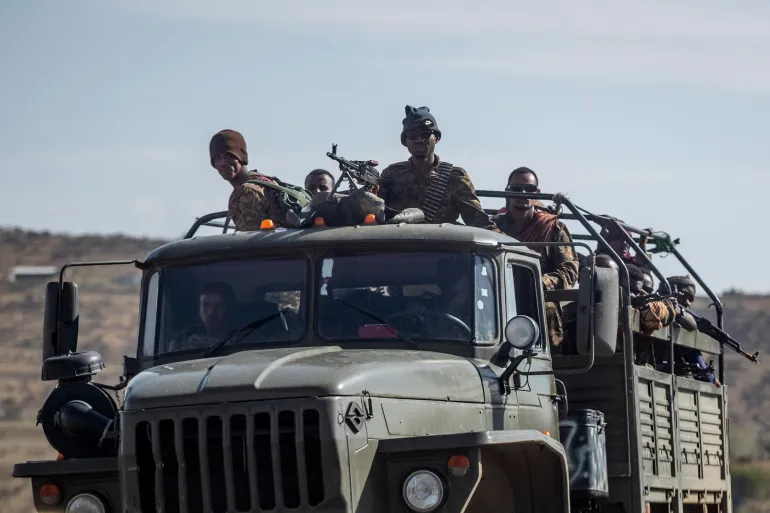
Ethiopia's federal army says it is responding to escalating violence in the north with caution, even as fighting spills across three regions and officials on the other side describe the situation as an outright war.
Army Chief of Staff Field Marshal Berhanu Jula, speaking publicly for the first time since the latest clashes began, said the military was meeting what he called provocations from the Tigray side with "wisdom and restraint". The reporting was carried by MyJoyOnline.
What is happening on the ground
The fighting started in Tigray and has since reached the neighbouring Afar and Amhara regions. It follows the formation of an alliance of seven armed groups, the Ethiopian Peoples' Forces Alliance for Survival, which says it wants to remove Prime Minister Abiy Ahmed's government from power.
In Afar, battles have concentrated around the town of Abala, where federal troops have been trying to block rebel advances.
In North Wollo, a zone of the Amhara region that borders Tigray, the army said on Thursday that a counter-offensive had killed 272 Tigrayan fighters and wounded 260 others.
The Tigray Army, the military wing of the Tigray People's Liberation Front (TPLF), rejects the idea of restraint. It says the federal government has launched a full offensive using infantry, mechanised units and drones. Addisalem Balema, a member of the TPLF central committee, told Al Jazeera the country was now in a "full war".
Clashes have also been reported around Sama, Soqota and Raya Alamata, with federal forces said to be advancing on the town of Alamata.
Internet access was cut across northern Ethiopia on Friday. That came a day after the United Nations said it was alarmed by reports that drones were being used against civilians in the area.
The Eritrea factor
Field Marshal Berhanu accused neighbouring Eritrea of funding and arming groups to weaken Ethiopia, pointing to what he called the "Tsimdo" alliance. Eritrea denied the accusation. Asmara has its own worry: that landlocked Ethiopia may be looking for a way to reach the Red Sea by force.
Why this matters beyond Ethiopia
The violence is the heaviest test yet of the 2022 Pretoria Agreement, the deal that ended a two-year civil war in Tigray. It also comes only weeks after Washington lifted sanctions imposed on Ethiopia and Eritrea over atrocities committed during that war, on the grounds that the national emergency behind them had expired.
Alemayehu Weldemariam, a law professor at Indiana University, told Al Jazeera the federal government carries much of the responsibility for the deal's collapse, citing fuel, cash and service restrictions on Tigray and the failure to establish the interim administration the agreement promised.
At the UN General Assembly, Ethiopia's president presented the country as a stabilising force in the region, blaming unnamed outside actors for interference and pointing to Addis Ababa's peace work in Sudan.
For Ghana and the wider African Union membership, a return to full war in Ethiopia would put fresh pressure on continental peace machinery, since the Pretoria deal was brokered under AU auspices.