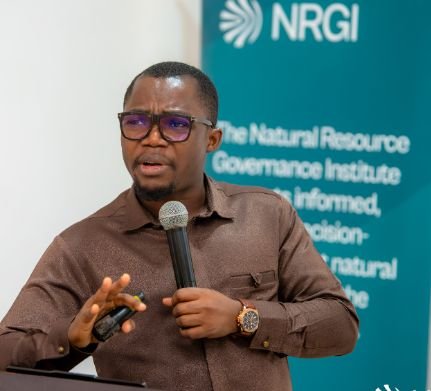
Patrick Stepenson says the state can investigate the collapsed power concession vigorously, but must show the law — not politics — is driving it.
Ghana's renewed investigation into the failed Power Distribution Services (PDS) concession should be judged not only by whether money is recovered or people are convicted, but by whether citizens can see that evidence and law decided the outcome.
That is the argument put forward by Patrick Stepenson, Country Manager of the Natural Resource Governance Institute (NRGI), a research and advocacy organisation that works on the governance of oil, gas and mining revenues. He spoke during a special edition of the NorvanReports X Space, as reported by Norvan Reports.
Why PDS still matters
PDS took over operation of the Electricity Company of Ghana (ECG) distribution network in 2019. The arrangement was suspended and later terminated after the guarantees backing the transaction were found to be invalid.
The dispute went to international arbitration, where the tribunal threw out PDS's main claims and confirmed that ECG was entitled to end the concession.
The collapse also cost the country money. Ghana lost about US$190 million in funding from the Millennium Challenge Corporation (MCC), the United States government agency that provides development grants, after the MCC concluded that Ghana had materially breached its compact obligations. That is part of why Stepenson accepts there is a genuine public interest in finding out what went wrong and whether any losses can be recovered or any crimes remain unpunished.
The four safeguards
Stepenson's concern is that a serious allegation does not by itself justify unlimited use of state power. He listed four principles: publishing the legal basis for state action, visible judicial oversight, public disclosure of findings, and respect for due process and individual rights.
"I think a publication of a clear legal basis will make sense," he said, arguing that citizens should be able to see the statutory authority and institutional mandate behind coercive steps — without investigators having to expose evidence that would damage a live case.
He said suspicion that state power can be used against political opponents is understandable in Ghana's political environment, where cases involving former officials are easily read along party lines.
He was not arguing that investigators should be stripped of their tools. Freezing accounts, preserving assets and gathering evidence can be necessary where funds or records may disappear. The question, he said, is whether those powers are used proportionately, under court supervision, and with the presumption of innocence intact.
Contract versus crime
Stepenson also drew a line between the two. The arbitration settled certain contractual questions, but jurisdictional limits around a separate Interim Protocol meant not every later dispute was resolved. An arbitral ruling upholding termination does not, on its own, establish criminal guilt for anyone linked to the deal.
He accepted that his proposals would not remove all doubt. "It will not do away with the risks completely," he said, but it would open "meaningful discussions around the credibility of these safeguards".