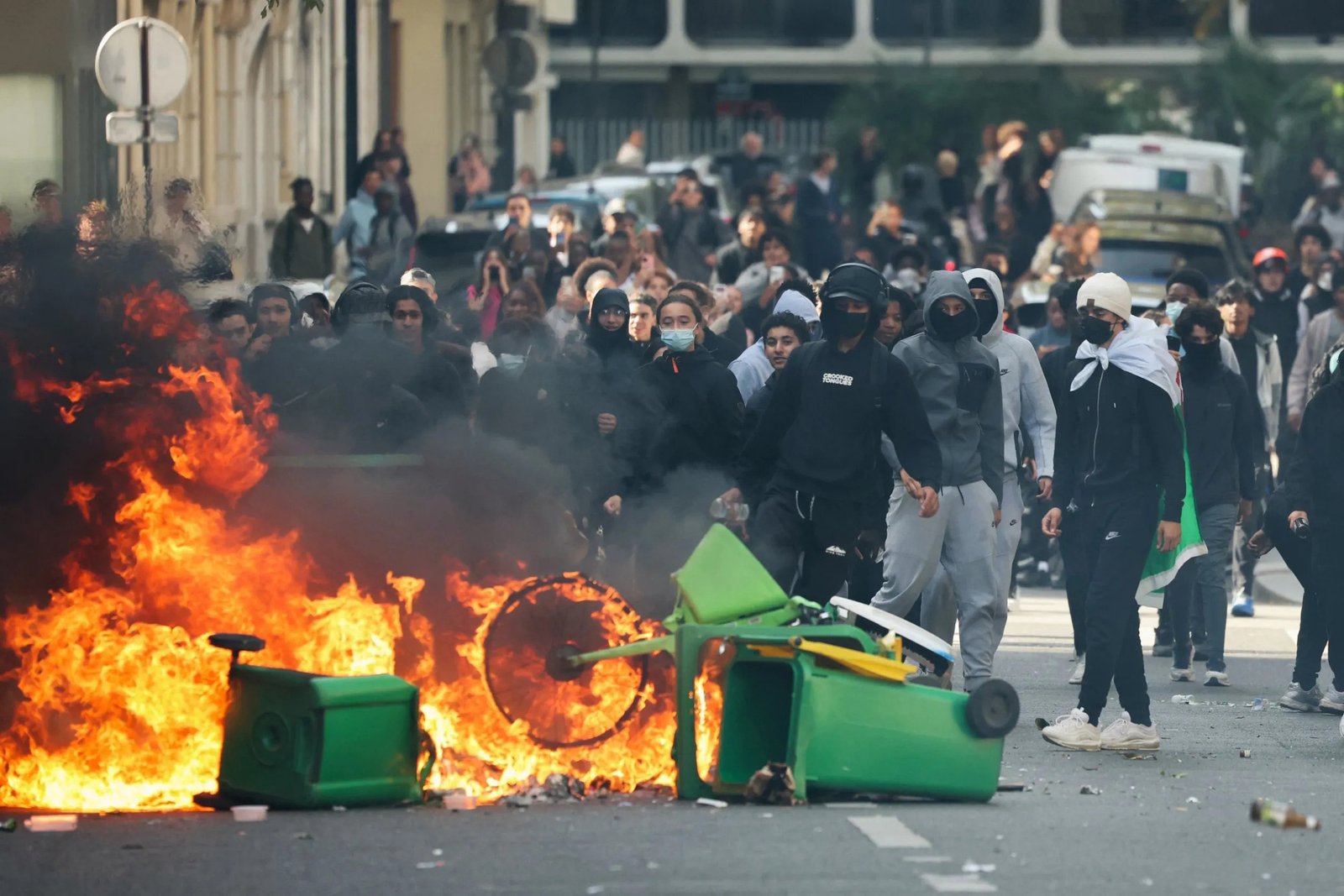
After three weeks of high-school demonstrations and nearly 6,900 arrests, Paris has made its first concrete concession \u2014 but student unions say it falls far short.
France's government has made its first real concession to the teenage protesters who have been shutting down high schools for three weeks, promising to deploy 3,000 extra supply teachers within days.
Education Minister Edouard Geffray announced the move in a television interview on Thursday evening, at the close of another day of street demonstrations that in places turned violent.
What is being offered
Geffray said new software at the education ministry would make it possible to direct the 3,000 replacement teachers to roughly 500 lycées \u2014 French high schools \u2014 identified as the most short-staffed. Many of those schools are in city suburbs with large immigrant populations, where teacher shortages are sharpest.
He also said extra money would be made available under an existing scheme that pays teachers for overtime hours to cover gaps, and promised that student grievances would feature in upcoming talks on the education portion of the 2027 state budget.
The complaint at the heart of the movement is one French educators have acknowledged for years: too many class hours are lost when teachers are absent and no substitute is sent.
The scale of the unrest
The Ghana Report notes that 6,877 people have been arrested since the protests began, and that 86 percent of them are under 18.
On Thursday \u2014 what unions called "Act Four" of the movement \u2014 about 71,000 people demonstrated across France, including 24,000 at the Bastille in Paris. Police used tear gas against groups who threw paving stones and homemade fireworks.
A lycée in Bordeaux was ransacked. In Marseille, a deputy head teacher was beaten.
By Friday the pressure had eased somewhat: around 140 lycées out of 3,500 were fully or partly closed, well down on earlier days. Another day of action is planned for Tuesday.
Students unimpressed
Student leaders have not called off anything. Nathanaël Combary of Renouveau Lycéen (Lycée Renewal), the most moderate of the three main high-school unions, said some announcements matched part of their demands but added that "people want to see the money and more concrete results."
Sabrine Kharbach of the Union Etudiante (Student Union), close to the radical-left France Insoumise party, was blunter: her group will keep protesting until there is €10bn on the table.
The government is reluctant to spend big. France's debt position is under close watch by international money markets, and ministers do not want to look like they are paying for calm.
Politically, the concession satisfied nobody. France Insoumise leader Jean-Luc Mélenchon said on X that students had "retaken the Bastille." Laurent Jacobelli, a spokesman for the hard-right National Rally, argued the message to young people was that breaking things gets results.
What comes next
A revived "yellow vest" movement has called demonstrations for Saturday 17 October, with anger also building over fuel prices and conditions in farming. Presidential elections are due in April and May.
Officials are quietly hoping half-term holidays at the end of next week, plus colder and wetter weather, will drain some energy from the streets.