Researchers meeting in Accra say the region’s out-of-school crisis carries a huge economic price, and that low-cost fixes already exist.
West Africa is losing an estimated $27.8 billion in economic value because large numbers of children are shut out of the classroom, a researcher told a conference in Accra.
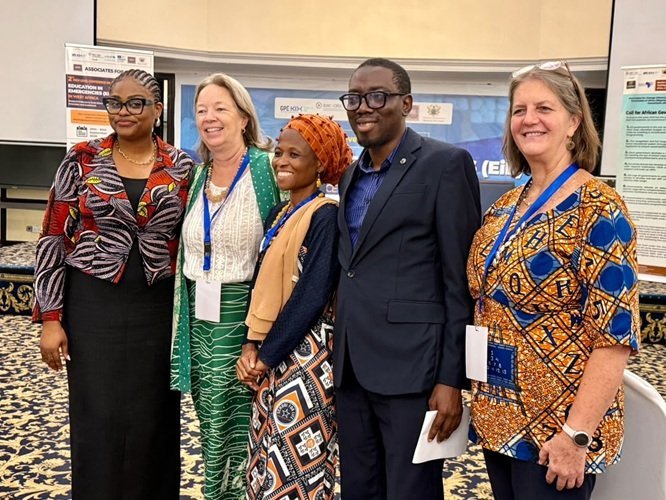
Dr Adedeji Adeniran, Director of Research at the Centre for the Study of the Economies of Africa, said the figure reflects lower productivity and the future opportunities millions of children will never get. He was speaking at the closing session of the second High Level Conference on Scaling Education Initiatives in Emergencies (EiE) in West Africa, also known as ACCELERATE+, held in the capital on Wednesday.
The Ghanaian Times reported his remarks from the event.
Dr Adeniran argued that the tools to reverse the trend already exist. What is missing, he said, is money and political leadership. He called on African governments to put more funding behind education innovations that have already been tested and shown to work.
What the conference was for
The two-day meeting brought together 150 delegates from across Africa, according to Dr Leslie Hayford, Director of Associates for Change (AfC), a Ghanaian research and development organisation.
She said the gathering put researchers, teachers, government officials, innovators and non-governmental organisations in the same room to review evidence on which education programmes actually improve learning, and which of them can be expanded cheaply.
That focus on cost matters. Education in emergencies refers to schooling for children whose learning has been interrupted by conflict, displacement, disasters or other crises. These are often the hardest and most expensive children to reach.
Reading in 45 to 60 days
One of the models discussed came from India. Dr Sunita Gandhi, founder of Dignity Education, said her Accelerating Learning for All programme has produced research showing that children can pick up basic reading skills within 45 to 60 days.
That timeline challenges the common assumption that foundational literacy and numeracy, meaning the ability to read, write and do simple arithmetic, must take years and heavy spending to build.
Dr Gandhi said pilot runs of the approach in Ghana, done with Associates for Change and the Olinga Foundation, have given encouraging results, and talks are underway to expand the work.
"Every child has a right to learn to read, write and do basic arithmetic," she said, warning that failing to deliver those skills damages families, communities and whole countries.
What happens next
Mrs Patience Effie Abue Dogbey, Deputy Executive Director of Support Services at the Complementary Education Agency, the state body responsible for alternative education pathways for out-of-school children, said the conference produced recommendations to guide future work.
She said the Agency will push to embed education in emergencies more firmly into national policy and will work more closely with NGOs and development partners.
For Ghanaians abroad who support schools and education charities back home, the conference signals where attention is shifting: not just building more classrooms, but proving which cheap, fast interventions actually get children reading.