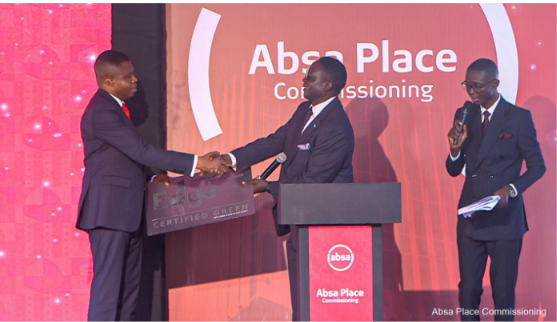
Absa Place on Independence Avenue has been certified EDGE Advanced, a benchmark the IFC says few buildings in Ghana meet.
Absa Bank Ghana Ltd's new head office in Accra has been awarded EDGE Advanced certification by the International Finance Corporation (IFC), the private sector arm of the World Bank Group, for its energy and water performance.
The building, called Absa Place, sits at 64 Independence Avenue in Ridge, one of the busiest commercial stretches of central Accra.
What EDGE Advanced actually means
EDGE is a green building certification system created by the IFC. It measures a building against what a conventional building of the same type would consume, looking at three things: energy use, water use and the carbon embodied in the construction materials themselves.
There is a standard EDGE certificate and a higher one. EDGE Advanced is the higher tier, reserved for buildings that go well beyond the basic savings threshold.
The features behind the rating
Absa Place runs a 570-kilowatt-peak solar installation. According to the bank, the system is sized to cover at least 80 per cent of the electricity the building uses on site
information reported by Ghanaian Times.
Cooling is handled by a water-cooled chiller system rather than the air-cooled units common in Ghanaian office blocks. Water-cooled systems generally use less energy. The glass front of the building is also designed to stop more than 70 per cent of outside heat before it reaches the offices, which cuts the cooling load further.
The certification follows other steps the bank has taken. In 2025, Absa ran 54 solar-powered automated teller machines across the country, producing roughly one million kilowatt-hours of clean electricity a year.
What the bank and the IFC said
Dr Edward Nartey Botchway, Managing Director of Absa Bank Ghana Ltd, framed the project as a long-term bet rather than a vanity build.
"We did not just want a bigger building; we wanted one that would remain efficient and relevant 20 years from now," he said, adding that the IFC certificate gives "independent validation" of the standards set for the project.
Deo Onyango, the IFC's Principal Country Officer for Ghana, said the investment "sets a strong benchmark for green buildings in Ghana" and showed how private companies can shape more resource-efficient urban growth across Africa.
Inside the building
Beyond the environmental systems, Absa Place is laid out for mixed working styles, with collaborative areas, quiet zones, and silent pods and booths. It also has a rooftop events space, a gym, an auditorium and a dedicated baby bay for nursing mothers.
Why it matters
For Ghanaians following developments at home from the United States and elsewhere, the story is less about one bank's office and more about cost. With electricity tariffs and grid reliability a constant concern in Accra, a commercial building that generates most of its own power and cuts its cooling bill is a test case other developers will watch.