Four mechanised boreholes in the Volta, Upper East and Northern regions have earned a Ghanaian bank international recognition in Bangkok.
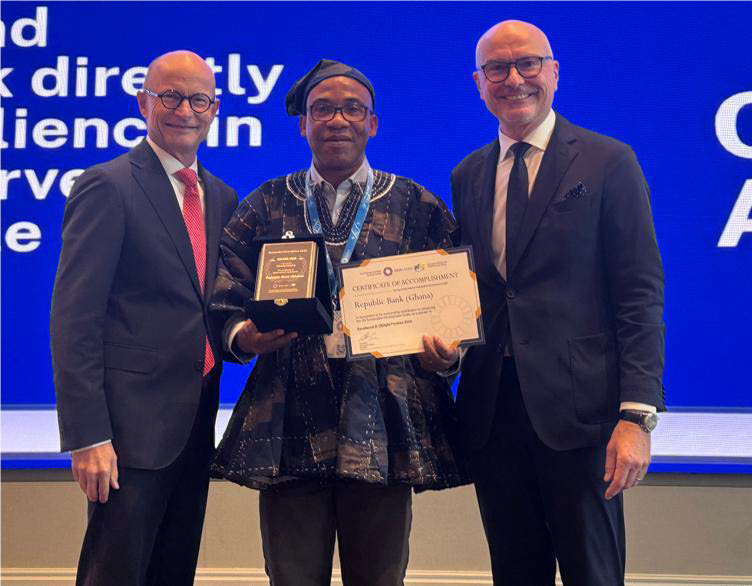
Republic Bank Ghana has won the Climate Finance category at the Sustainable Development Goal Awards organised by the World Savings and Retail Banking Institute and the European Savings and Retail Banking Group (WSBI-ESBG), for a set of water projects in three regions.
The award was presented in Bangkok at a ceremony held alongside the 2026 Annual Meetings of the International Monetary Fund (IMF). Dr Benjamin Dzoboku, Managing Director of Republic Bank Ghana, received it on the bank's behalf.
What was recognised
The entry centred on mechanised boreholes built at Adidome Senior High School and Taviefe Senior High School in the Volta Region, at Pwalugu in the Upper East Region, and at Dingoni in the Northern Region.
The facilities run on solar power and electricity and were delivered under the bank's corporate social responsibility programme, Power to Make a Difference. They serve students, school staff and nearby communities that previously had limited access to safe water.
The projects speak to Sustainable Development Goal 6, the United Nations target on clean water and sanitation.
Why water counts as climate finance
Climate finance is usually discussed in terms of billion-dollar pledges and emissions targets. As Norvan Reports notes in its coverage, these borehole projects reduce the idea to a far simpler question: can a community still get reliable water when rainfall patterns shift?
Water access touches health, schooling and household income at the same time. Pupils who spend hours fetching water lose classroom time. Schools without dependable supply struggle with sanitation. Families drawing from unsafe sources face higher disease risk and medical bills.
Solar pumping adds a second benefit, cutting dependence on unstable electricity supply and lowering running costs. But the long-term value will depend on maintenance, availability of spare parts, water-quality testing and clear agreement on who owns and repairs the systems. Projects of this kind are often celebrated at commissioning and quietly abandoned years later when a pump fails.
Dzoboku's framing
"For us, climate finance must translate into practical benefits for people," Dr Dzoboku said, pointing to students with water at school and families with a dependable source. He added that the bank was proud to accept the award on behalf of its staff, customers, partners and the communities involved.
The bigger money behind it
The recognition comes as Republic Bank Ghana's parent company, Republic Financial Holdings Limited, pushes a wider sustainable-finance agenda. In September 2026 the group announced a commitment to deploy US$750 million by 2030 across the Caribbean and Ghana, targeting climate action, women-owned and women-led businesses, and agriculture.
For Ghanaians following from abroad, the figure is worth watching for what it means in practice. The questions that will determine its value are how much of the US$750 million lands in Ghana, which sectors receive it, on what terms, and whether the environmental and social results are independently verified rather than simply announced.
Corporate giving can fix an immediate gap. Financing climate-resilient agriculture, renewable energy and water systems at national scale requires mainstream lending, not donations.