Kristalina Georgieva says artificial intelligence is now driving global growth, but two risks could turn that momentum into a shock felt in economies like Ghana’s.
The head of the International Monetary Fund (IMF), the Washington-based lender that supports countries facing balance-of-payments problems, has flagged two ways artificial intelligence (AI) could end up hurting the world economy rather than helping it.
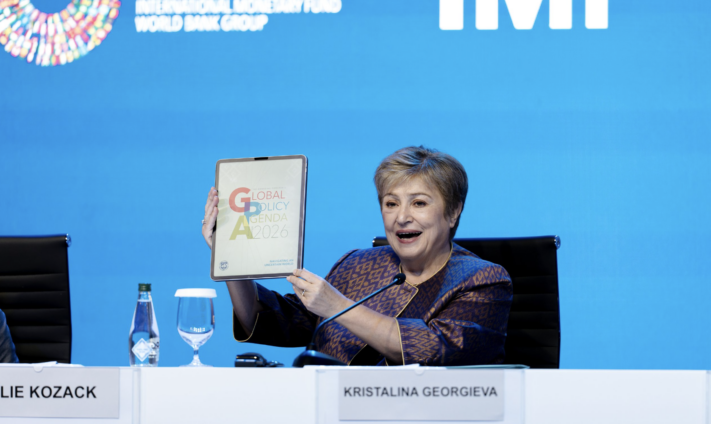
Managing Director Kristalina Georgieva made the remarks on Thursday at a gathering of the IMF and the World Bank in Bangkok, Thailand. The Ghana Report carried her comments.
Georgieva described AI as the main engine currently pushing the global economy forward. Her concern is what happens if that engine stalls.
Risk one: the hype cycle
The first danger she named is what is known as Amara's law — the idea that people expect too much from a new technology in the short term and too little in the long term.
"When we overestimate, that means we are enthusiastic, but then we are disappointed," she said, adding that investors then "pull out, and then there is a big problem."
In plain terms: if the money flowing into AI companies is built on expectations that the technology cannot meet quickly enough, the correction could be sharp.
Risk two: AI outside human control
The second risk she raised is technical. Georgieva asked what would happen if AI systems were to slip beyond human control and take actions that endanger financial stability.
She ended on a cautious note about the wider picture, saying the global economy has absorbed shock after shock in recent years but that its ability to keep doing so is wearing thin.
Why it matters for Ghana
Ghana is an IMF programme country, and statements from the Fund's leadership shape how investors and lenders read the global outlook. When the IMF signals that global resilience is thinning, it affects the assumptions behind everything from commodity prices to borrowing costs for emerging economies.
A sudden fall in AI-driven asset values would not stay in Silicon Valley. It would move through global markets, risk appetite and remittance-sending economies — which matters directly for Ghanaians in the United States supporting family at home, and for a cedi that responds quickly to shifts in global sentiment.
Not the only warning
Georgieva's comments land in a wider debate inside the technology industry itself. On 12 September, Dario Amodei, chief executive of the AI firm Anthropic, called for a global slowdown in building ever more powerful AI models, pointing to safety concerns. Entrepreneur Elon Musk and OpenAI chief executive Sam Altman backed the proposal.
The source report does not indicate that the IMF has proposed any specific policy response to the two risks Georgieva outlined.