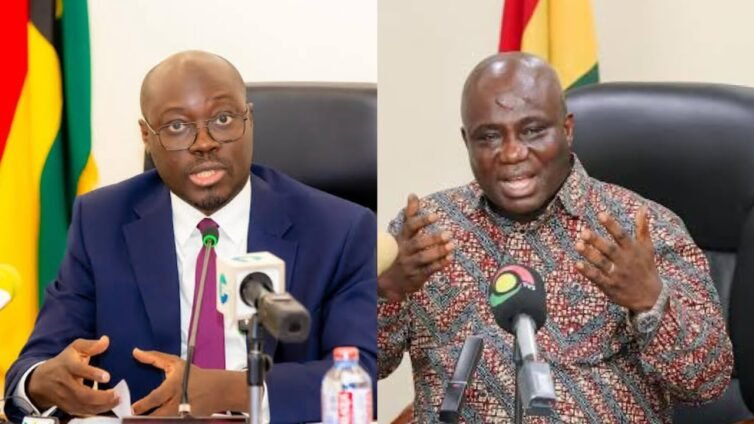

The former Finance Minister argues the current diesel price cut is temporary and paid for by squeezing petroleum sector funds, not by the national budget.
Former Finance Minister Dr Mohammed Amin Adam has pushed back at the government's GH¢2 reduction in the price of diesel, saying the New Patriotic Party (NPP) put in place deeper and longer-lasting measures when it was in office.
Dr Amin Adam, who is now Ranking Member on Parliament's Finance Committee, made the argument in a Facebook post on Sunday, 27 September. His comments were reported by MyJoyOnline.
What he says the NPP did
He listed a set of tax changes he says the previous administration used to hold down pump prices. They include scrapping the excise tax on fuel and cutting the Special Petroleum Tax twice, first from 17.5 per cent to 15 per cent and then to 13 per cent.
He also cited the switch of the Special Petroleum Tax from an ad valorem tax, which is charged as a percentage of value, to a specific tax charged at a fixed amount. On top of that, he said, the Petroleum Stabilisation and Recovery Levy was zero-rated for long stretches.
His central point is that those steps were written into law and their cost was carried by the national budget, rather than being short-term fixes.
Dr Amin Adam further pointed to the Gold for Oil programme, under which Ghana used gold to help pay for imported petroleum products. He called the scheme "revolutionary" and said it brought prices down after pump prices had climbed above GH¢20 per litre, while easing some of the pressure on foreign exchange. He previously chaired the initiative.
His problem with the GH¢2 cut
On the current relief, he argued that the reduction was achieved by trimming the margins of the Bulk Oil Storage and Transportation Company (BOST), the state firm that handles fuel storage and haulage, and the Unified Petroleum Pricing Fund (UPPF), which equalises transport costs so prices are similar across the country.
"The NDC's current GH¢2 relief on diesel is temporary and worse of all, it is quasi-fiscal," he said, arguing that cutting those margins weakens the resilience of the petroleum sector. He urged the government to look at broader measures if it wants relief that lasts.
Why it matters
Diesel prices feed straight into transport fares, the cost of moving goods to market and the price of food. For Ghanaians abroad who send money home, fuel costs are part of what determines how far remittances stretch.
The disagreement is essentially about who pays for cheaper fuel: the national budget through tax cuts, or state petroleum institutions through reduced margins. The government has not responded publicly to Dr Amin Adam's criticism.